Why USB Became Universal From USB One To USB C
by Scott
Universal Serial Bus did not become universal by accident. It became universal because it solved several persistent engineering problems at once and then kept evolving without abandoning what came before. Its success is rooted in technical design decisions that balanced simplicity for consumers with deep flexibility for engineers. From the first USB 1.0 specification in the mid 1990s to modern USB C with multi gigabit signaling and high wattage power delivery, the standard has continuously adapted while maintaining a common foundation.
Before USB, personal computers were a forest of incompatible connectors. Keyboards and mice used PS2 ports. Printers relied on bulky parallel ports. Modems and industrial devices used serial ports. External storage sometimes required proprietary interfaces or SCSI. Each interface had its own electrical characteristics, communication model, and driver complexity. Hot plugging was often unreliable or unsupported. Resource conflicts such as IRQ sharing were common. USB was designed to eliminate that fragmentation by introducing a single serial bus architecture that could handle a wide range of device classes.
USB 1.0, released in 1996, introduced a host controlled bus topology. The host controller managed all communication. Devices did not speak unless spoken to. This master slave architecture simplified arbitration and reduced the risk of bus contention. Instead of every device negotiating peer to peer access, the host scheduled transactions in frames. Low speed devices operated at 1.5 megabits per second and full speed devices at 12 megabits per second. That was modest even for the time, but sufficient for keyboards, mice, and printers.
One of the most important design decisions was class based protocol standardization. USB defined device classes such as Human Interface Device, Mass Storage, and Audio. If a device complied with a class specification, the operating system could use a generic driver. This reduced the need for custom drivers and dramatically improved plug and play usability. Enumeration became automatic. When a device was connected, the host requested descriptors that described vendor ID, product ID, device class, and endpoint configuration. The operating system then matched that information to an appropriate driver stack.
USB 2.0, introduced in 2000, increased signaling speed to 480 megabits per second with high speed mode. Backward compatibility was preserved. Devices negotiated their supported speed during the enumeration process. The physical connector remained largely the same, particularly the Type A and Type B connectors that became familiar on desktops and printers. This backward compatibility was critical. Users could upgrade computers without replacing peripherals. Manufacturers could build new high speed devices without abandoning older hosts.
Protocol negotiation in USB is layered and dynamic. At the electrical level, the presence of pull up resistors on the data lines signals device speed capability. The host controller detects connection and initiates reset signaling. During enumeration, control transfers on endpoint zero exchange structured descriptor data. This descriptor model allows extensibility. New capabilities can be introduced without breaking the overall framework. Composite devices can present multiple interfaces under one physical connection. A single USB device can simultaneously expose storage, network, and human interface functions.
Power delivery was another defining factor in USB becoming universal. Early USB specifications allowed devices to draw up to 100 milliamps by default and up to 500 milliamps after configuration under USB 2.0. This eliminated external power adapters for many peripherals. Bus powered devices reduced clutter and cost. As mobile devices proliferated, USB evolved further. USB Battery Charging specifications allowed higher current for dedicated charging ports. Eventually USB Power Delivery introduced a negotiation protocol over dedicated configuration channel pins in USB C connectors. This allowed dynamic voltage and current negotiation up to 100 watts and later 240 watts in extended power range revisions.
USB Power Delivery negotiation is packet based and occurs independently of the main data lanes. Devices exchange capability advertisements and request specific voltage and current profiles. This enables laptops to charge over the same cable that carries data. It also enables role swapping, where a device can act as either power source or sink depending on negotiation outcome. This flexibility fundamentally changed how portable electronics are powered. It also positioned USB C as a universal charging standard across smartphones, tablets, and even some desktop systems.
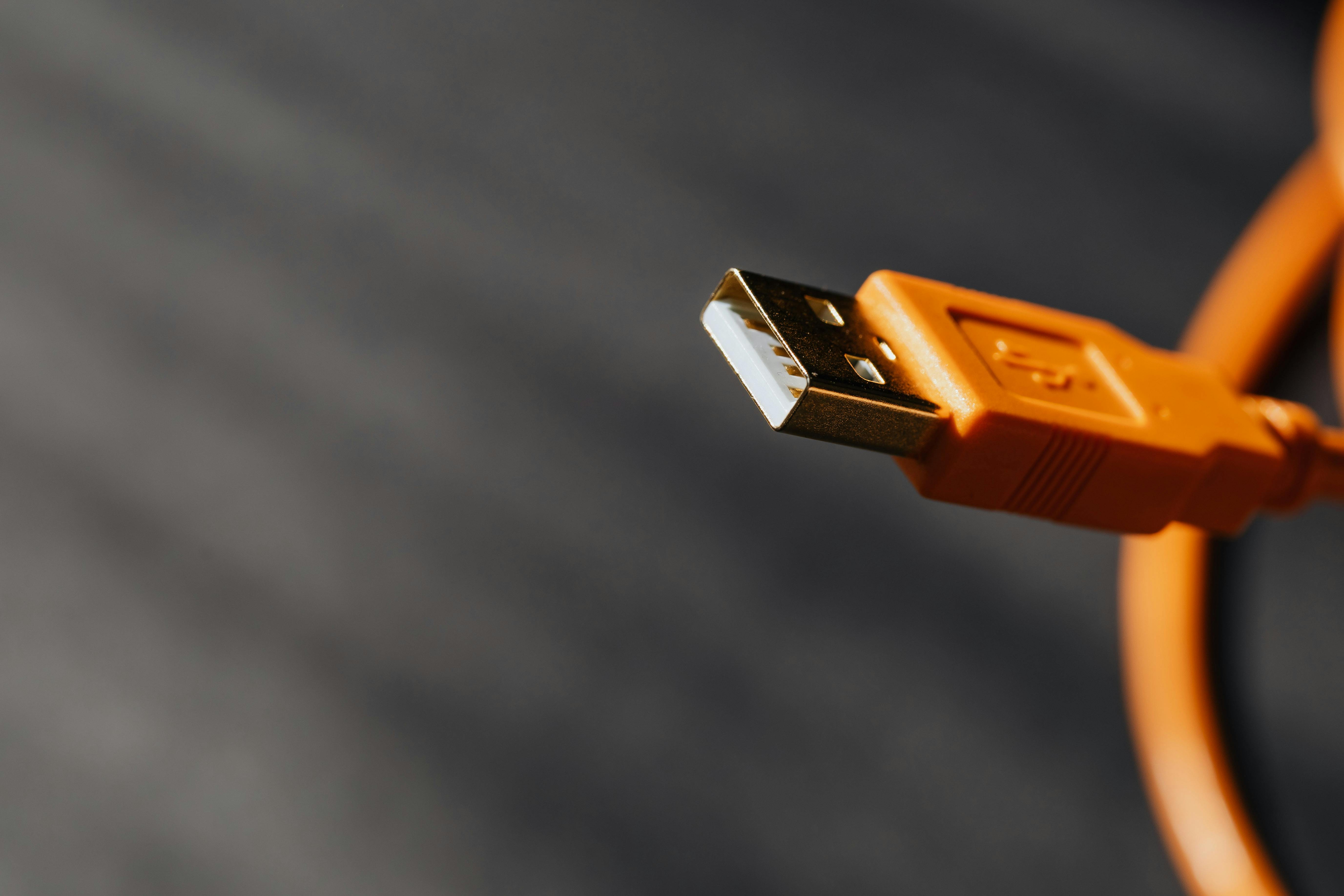
The evolution from USB 1 through USB 3 introduced not only speed improvements but architectural changes. USB 3.0, later renamed USB 3.1 Gen 1, increased throughput to 5 gigabits per second using separate transmit and receive differential pairs. This introduced full duplex communication instead of the half duplex model of earlier versions. USB 3.1 Gen 2 doubled that to 10 gigabits per second, and USB 3.2 expanded lane aggregation for even higher performance. Throughout these transitions, connectors maintained backward compatibility through additional pins while retaining legacy signaling support.
USB C represented a more radical physical transformation. Unlike previous connectors, USB C is reversible. It includes 24 pins supporting high speed differential pairs, power negotiation channels, legacy USB 2.0 lines, and alternate mode functionality. Alternate modes allow the physical USB C connector to carry other protocols such as DisplayPort, HDMI, or Thunderbolt. This is achieved by dynamically reassigning high speed lanes after negotiation. The result is a single compact connector capable of data transfer, video output, audio transport, and high power charging.
Backward compatibility has always been central to USB strategy. Even as signaling speeds increased and connectors evolved, adapters and dual mode controllers ensured legacy support. USB hubs play a crucial role in this model. Hubs contain transaction translators that allow low speed and full speed devices to coexist with high speed hosts. This hierarchical star topology allows expansion without complex bus arbitration logic in each peripheral.
Security and reliability improvements have also contributed to universality. Error detection through cyclic redundancy checks ensures data integrity. Retransmission mechanisms handle transient faults. Later specifications introduced improved shielding and differential signaling to reduce electromagnetic interference. As data rates increased into multi gigabit ranges, signal integrity engineering became more sophisticated, involving encoding schemes such as 8b10b and later 128b132b to maintain clock recovery and DC balance.
USB became universal not only because of technical capability but because of governance. The USB Implementers Forum coordinated specification development and certification programs. Compliance testing ensured interoperability. Vendors had confidence that a certified device would function across compliant hosts. This ecosystem coordination prevented fragmentation and reinforced user trust.
Today USB C with USB4 integrates Thunderbolt technology and supports up to 40 gigabits per second. It can tunnel PCI Express and DisplayPort alongside traditional USB packets. The line between internal and external buses has blurred. External GPUs, high resolution monitors, and high speed storage arrays can operate over a single standardized connector.
In hindsight, USB succeeded because it unified data and power under a scalable, extensible architecture while preserving backward compatibility. It abstracted device diversity through standardized classes and descriptor based negotiation. It simplified the user experience through automatic enumeration and hot plugging. It continuously increased performance without forcing ecosystem resets. Few interface standards manage to evolve across decades without collapsing under their own complexity. USB achieved universality by solving real problems pragmatically and by adapting its electrical, protocol, and power layers to new technological realities while maintaining a consistent foundation.