Why RAM Is Volatile And Why That Still Matters
by Scott
Random access memory is called volatile memory because it forgets everything the moment power disappears. That characteristic is not an accident or an oversight. It is a direct consequence of how modern memory cells are physically constructed, and it remains essential to how computers achieve high speed performance. Despite decades of research into non volatile alternatives, volatile RAM continues to dominate system memory because its electrical properties allow density and speed that are still difficult to match.
The most common form of system memory today is dynamic random access memory, or DRAM. At its core, a DRAM cell is deceptively simple. Each bit of information is stored using a tiny capacitor paired with a transistor. The capacitor acts as a miniature bucket for electrical charge. If the capacitor holds charge, the bit is interpreted as a one. If it is discharged, the bit is interpreted as a zero. The transistor functions as a switch, controlling access to the capacitor when the memory controller reads or writes data.
The simplicity of the one transistor one capacitor structure allows DRAM to achieve extremely high density. Billions of these cells are fabricated onto a silicon die using lithographic processes. However, the capacitor in each cell is physically small. Its ability to retain charge is limited by leakage currents and imperfections in insulating materials. Even under ideal conditions, the stored charge gradually dissipates. Without intervention, the stored bit would fade within milliseconds.
This is why DRAM requires refresh cycles. The memory controller periodically reads each row of cells and rewrites the data, restoring the charge level in the capacitors. Refresh operations occur continuously in the background, typically every few milliseconds. During a refresh, portions of the memory array are temporarily unavailable for access. The refresh interval must be carefully chosen. If it is too long, data corruption occurs. If it is too short, performance suffers due to excessive refresh overhead.
Reading a DRAM cell is itself a destructive operation. When the memory controller activates a row, the tiny charge in each capacitor is sensed by amplifiers connected to bit lines. The sensing process effectively drains the capacitor, so the value must be written back immediately. This design trades persistence for speed and density. The destructive read and mandatory refresh behavior are acceptable because the system continuously supplies power.
The volatility of DRAM is fundamentally tied to physics. The capacitor relies on an electric field across a dielectric material. Leakage currents through that dielectric and through transistor junctions are unavoidable. As manufacturing processes shrink transistors to nanometer scales, controlling leakage becomes increasingly challenging. Engineers design specialized high dielectric constant materials and three dimensional capacitor structures to maximize charge retention, but the stored energy remains extremely small. Remove the supply voltage, and there is nothing maintaining the electric field. The stored state collapses almost instantly.
Static RAM, or SRAM, is another volatile memory type used in CPU caches. SRAM does not use capacitors. Instead, each bit is stored in a bistable flip flop circuit composed of multiple transistors, typically six. As long as power is present, the circuit maintains one of two stable states. SRAM does not require refresh cycles and offers lower latency than DRAM. However, it consumes more silicon area per bit and significantly more power. That is why SRAM is used for small high speed caches close to the processor cores, while DRAM provides larger capacity system memory.
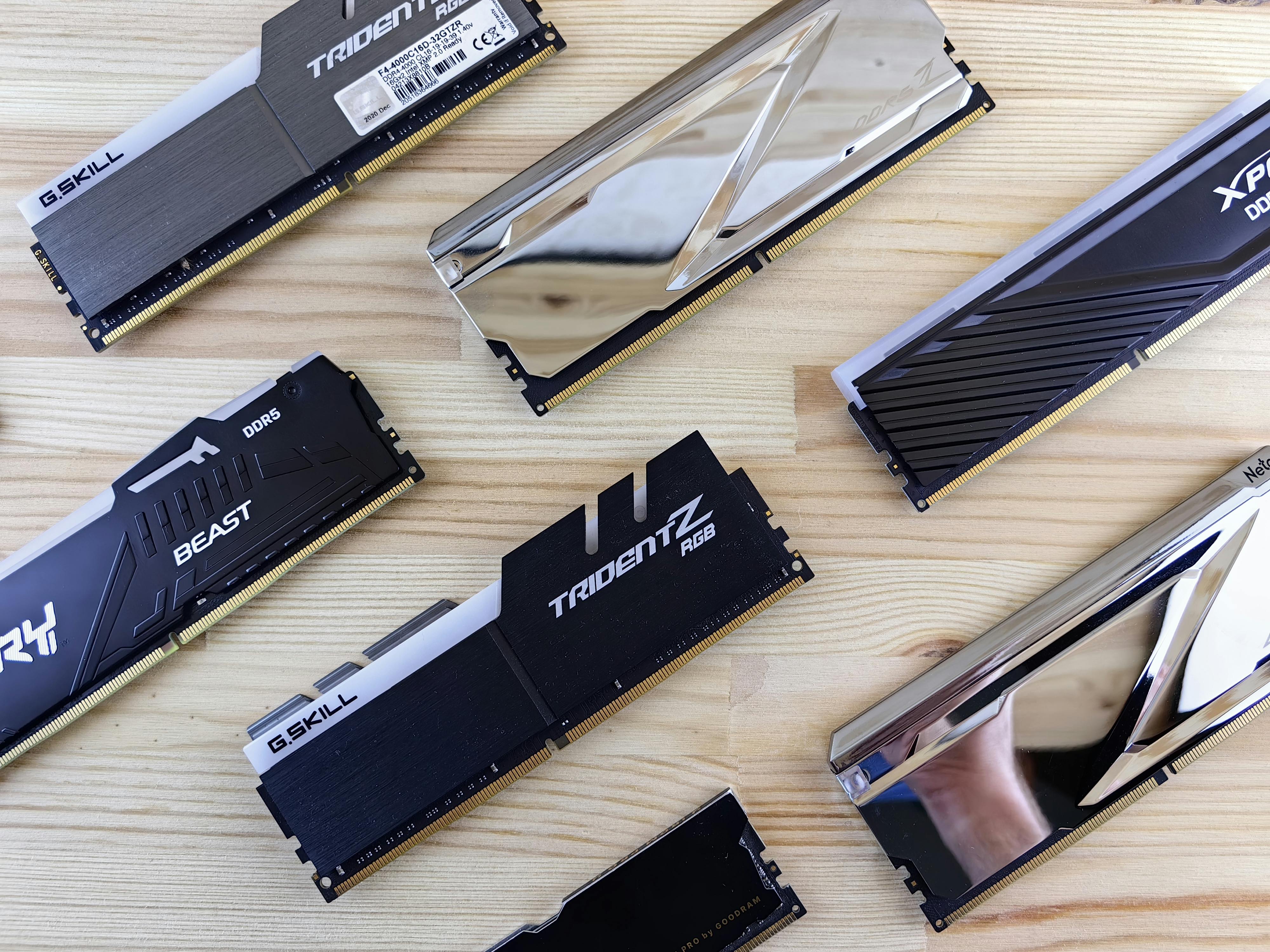
The question arises why volatile memory remains central when non volatile memory technologies exist. Flash memory, for example, retains data without power by trapping electrons in a floating gate structure. Emerging technologies such as phase change memory, magnetoresistive RAM, and resistive RAM promise non volatile operation with potentially faster access times than flash. However, none have yet matched the combination of density, cost per bit, write endurance, and speed achieved by DRAM for main memory applications.
Flash memory is inherently slower for writes because it requires high voltage programming and block erasure. It also has limited write endurance compared to DRAM. While flash works well for storage, it cannot replace DRAM as system memory without significant performance penalties. Non volatile memory technologies that approach DRAM speed often face manufacturing complexity, limited scalability, or higher cost. Integrating them into existing memory hierarchies presents additional architectural challenges.
Volatility also provides certain advantages. Because DRAM does not retain data without power, it naturally clears sensitive information when a system shuts down. While specialized attacks can exploit residual charge under certain conditions, in normal operation volatile memory reduces long term persistence of secrets. This behavior aligns with many security models where sensitive data should not survive a power cycle.
Modern computing architecture depends on a memory hierarchy optimized for latency and bandwidth. The processor can execute billions of instructions per second. To keep pace, memory must deliver data with extremely low latency. DRAM is designed for high bandwidth parallel access, organized into banks, rows, and columns. Memory controllers use techniques such as burst transfers and prefetching to maximize throughput. Replacing DRAM with a slower non volatile alternative would bottleneck the entire system.
Even so, research continues into persistent memory that bridges the gap between storage and RAM. Some systems have experimented with hybrid architectures where non volatile memory is mapped into the system address space alongside DRAM. This allows certain data structures to survive reboots while still maintaining acceptable performance for most workloads. However, DRAM remains the primary working memory because of its predictable speed and mature manufacturing ecosystem.
Thermal stress and scaling limitations pose ongoing challenges. As process nodes shrink, capacitors must hold sufficient charge in ever smaller volumes. Engineers use complex three dimensional capacitor designs such as deep trench or stacked capacitors to increase effective surface area. Memory modules incorporate error correcting codes to compensate for higher bit error rates. All of these innovations are aimed at preserving the viability of volatile DRAM as capacities continue to rise.
The volatility of RAM is not a flaw waiting to be fixed. It is the direct consequence of a design optimized for speed, density, and cost. Refresh cycles, destructive reads, and constant power requirements are accepted tradeoffs in exchange for nanosecond level access times and gigabytes of affordable capacity. Until a non volatile technology can match that balance at scale, volatile RAM will remain central to computing.
In the end, the reason RAM is volatile is the same reason it is fast and dense. Its information is stored as fleeting electrical charge in microscopic capacitors or transistor states. That fleeting nature demands continuous refresh and uninterrupted power, but it also enables the high performance systems that define modern computing. Volatility still matters because the speed of thought in a machine depends on memory that lives entirely in the present moment.