Why Quantum Computers Will Live in Data Centres Not Desks
by Scott
Quantum computing is often described in dramatic terms. Popular imagination paints a future where quantum laptops sit on office desks and quantum phones slip into pockets, performing calculations that make today’s supercomputers look primitive. The reality is far more grounded and far more interesting. Quantum computers are almost certainly destined to live in specialized data centres rather than under our desks, and cloud access is not just a convenient delivery model but the most natural and practical one.
To understand why, it helps to start with what a quantum computer actually is. Unlike classical computers that process information in bits represented as zeros and ones, quantum computers use quantum bits, or qubits, which can exist in superpositions of states and can be entangled with one another. These properties allow certain computations to scale in fundamentally different ways from classical algorithms. However, the same physics that grants quantum machines their power also makes them extremely fragile.
Qubits are not robust components like transistors etched into silicon. They are delicate physical systems such as superconducting circuits, trapped ions, or photonic states that must be carefully isolated from environmental noise. Even minute vibrations, stray electromagnetic fields, or small fluctuations in temperature can disrupt their quantum state. This phenomenon, known as decoherence, collapses the quantum information the system is trying to preserve. Maintaining coherence long enough to perform meaningful computation requires extraordinary engineering controls.
The most mature quantum platforms today, particularly superconducting qubits, operate at temperatures only a fraction of a degree above absolute zero. Achieving these temperatures requires dilution refrigerators that are large, complex, and energy intensive. These systems resemble industrial laboratory equipment rather than consumer electronics. They involve multiple cooling stages, vacuum chambers, cryogenic plumbing, and elaborate shielding. Shrinking such infrastructure into a personal device is not simply a matter of miniaturization. It would require rethinking fundamental thermodynamic and materials constraints that currently define quantum hardware.
Even platforms that operate at or near room temperature, such as certain photonic systems, still demand highly precise optical components, stable laser sources, and vibration isolation. Trapped ion systems require ultra high vacuum chambers and finely tuned electromagnetic traps. In all cases, the surrounding apparatus is as critical as the qubits themselves. These are not devices that can tolerate the casual environment of a home or office, where temperature fluctuates, power quality varies, and mechanical shocks are routine.
Beyond the hardware constraints, there is the issue of scale. Quantum advantage in practical applications generally requires not just a handful of qubits but hundreds or thousands of high fidelity qubits with error correction. Error correction in quantum computing is particularly demanding because physical qubits are noisy. A single logical qubit that is robust enough for long computations may require dozens or even hundreds of physical qubits working together in carefully structured codes. This multiplies the hardware footprint dramatically.
As a result, large scale quantum computers are likely to be physically substantial systems housed in controlled environments. Data centres already exist to host equipment that requires strict power conditioning, cooling, physical security, and network connectivity. They are designed to manage complex infrastructure at scale. Quantum computers fit naturally into this model. Instead of racks of classical servers, future facilities may contain cryogenic stacks and photonic assemblies connected to classical control electronics.
There is also the question of cost. Quantum hardware today costs millions of dollars to design, build, and maintain. Even as technology matures and economies of scale reduce some costs, the fundamental complexity of the systems suggests that they will remain expensive relative to consumer electronics. The economic model that makes sense is shared access. Cloud computing has already demonstrated that expensive compute resources can be efficiently distributed across many users through remote access. The same principle applies even more strongly to quantum systems.
From a workload perspective, quantum computers are not general purpose replacements for classical machines. They excel at specific categories of problems such as certain types of optimization, quantum simulation, and cryptographic analysis. For everyday tasks like browsing the web, writing documents, or streaming media, classical processors are vastly more efficient and practical. Embedding a quantum processor in a personal computer would provide little benefit for most users while introducing enormous complexity.
Instead, a hybrid model is emerging. Classical computers handle general processing and interface tasks, while quantum processors are invoked remotely for specialized subroutines. This architecture mirrors how graphics processing units and cloud accelerators are already used. In practice, a user might submit a complex optimization problem through an application that automatically packages the relevant portion for execution on a remote quantum processor. The results are returned and integrated into the classical workflow. The user never interacts directly with the quantum hardware.
Security and governance considerations further reinforce the data centre model. Quantum computers capable of breaking certain cryptographic schemes would be extremely sensitive assets. Housing them in secure facilities allows for controlled access, auditing, and regulatory oversight. It also simplifies compliance with export controls and national security regulations that are likely to surround advanced quantum technologies. Distributing such capability into consumer devices would complicate oversight and increase risk.
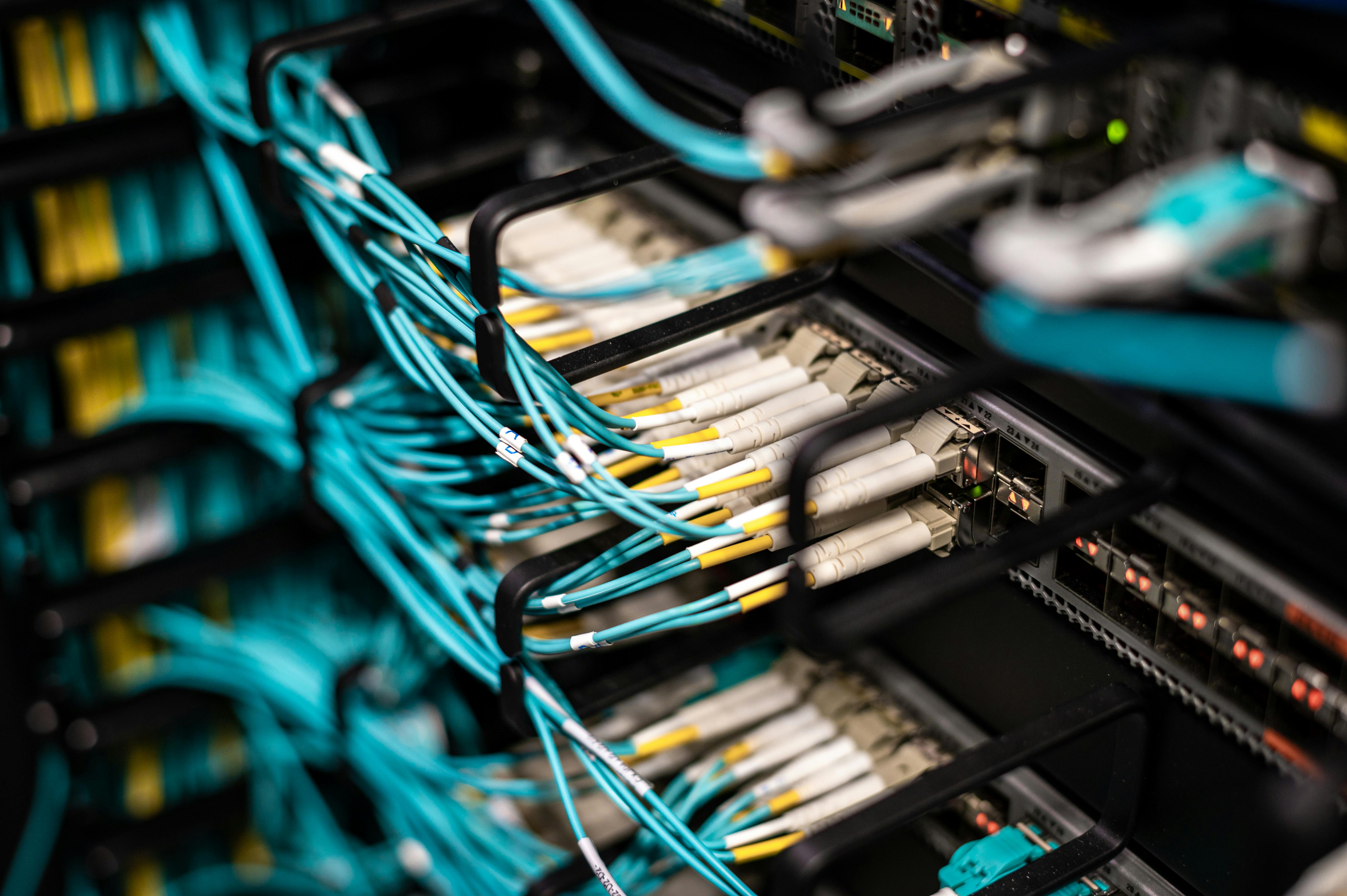
Energy consumption and infrastructure also play a role. Even if future quantum systems become more energy efficient at the qubit level, the supporting systems for control electronics, cooling, and error correction will consume significant power. Data centres are already optimized for high density power delivery and cooling. Integrating quantum hardware into these environments allows for shared infrastructure and more efficient resource management. A desktop quantum machine would require disproportionate support relative to its practical utility.
There is a strong historical analogy in supercomputing. The most powerful classical computers have never become personal devices. Instead, they have remained in specialized facilities, accessible remotely by researchers and enterprises. Over time, some techniques developed for supercomputers have filtered down into consumer hardware, but the flagship systems remain centralized. Quantum computing is likely to follow a similar trajectory, with its most advanced incarnations living in dedicated facilities.
Cloud access is not merely a workaround. It aligns with how quantum computing integrates into modern software ecosystems. Quantum development frameworks are already built around remote execution. Developers write quantum circuits, simulate them locally, and then submit them to real quantum processors via cloud APIs. This workflow abstracts the physical machine and treats it as a service endpoint. It encourages experimentation and collaboration across geographic boundaries without requiring physical proximity to the hardware.
Scalability also favors centralization. As quantum processors improve, upgrading them in a data centre environment is straightforward relative to recalling or replacing consumer hardware. Operators can swap cryogenic stages, install new qubit arrays, and update control systems without affecting end users beyond improved performance. This mirrors the rapid evolution of cloud infrastructure, where users benefit from hardware upgrades without purchasing new devices.
It is also worth considering reliability and maintenance. Quantum systems require continuous calibration. Qubits drift over time, control pulses must be tuned, and environmental noise must be monitored. Maintaining stable operation demands teams of specialists and automated diagnostic systems. Data centres can support these operational requirements. A consumer environment cannot reasonably provide the expertise or monitoring needed to keep a quantum processor functioning optimally.
The perception that every breakthrough technology must eventually become personal is shaped by the history of classical computing. Early mainframes gave way to personal computers as semiconductor technology matured and costs fell. However, this transition depended on a particular set of physical and economic properties. Transistors scaled predictably, power consumption dropped, and manufacturing processes became standardized. Quantum systems do not follow the same scaling laws. They are bound by quantum mechanical constraints that do not disappear with mass production.
Future innovations may reduce the size and complexity of quantum hardware. New materials, improved error correction codes, and novel qubit architectures could make systems more compact and robust. Even so, the need for environmental isolation, precise control, and substantial supporting infrastructure is unlikely to vanish entirely. The most capable machines will probably remain too specialized and resource intensive for personal ownership.
The natural model is therefore a layered ecosystem. At the base are quantum data centres hosting advanced hardware. Above that are cloud platforms providing access, scheduling, and integration with classical compute resources. Developers build applications that seamlessly combine classical and quantum algorithms. End users interact with familiar interfaces, often unaware that quantum processing is occurring behind the scenes.
This model also democratizes access. Rather than concentrating quantum capability in institutions that can afford to build their own machines, cloud delivery allows startups, universities, and individual researchers to experiment with real quantum hardware. It lowers the barrier to entry and accelerates innovation. Centralized facilities can achieve higher utilization rates by serving many clients, improving overall efficiency.
In practical terms, quantum computers are tools for specific, high value tasks rather than universal personal appliances. They will support research in chemistry, materials science, logistics, finance, and cryptography. They will augment classical computing rather than replace it. Their physical and operational demands make data centres the logical home, and cloud access the logical interface.
The idea of a quantum computer on every desk is appealing as a symbol of technological progress. However, the physics, economics, and engineering realities point in a different direction. Quantum machines are industrial scale instruments that thrive in controlled environments, connected to global networks. Their power lies not in personal ownership but in shared, remote accessibility. In that sense, quantum computing is less about shrinking machines to fit our desks and more about expanding our networks to reach machines that remain, by necessity, far away.