Why GPS Failure Would Break More Than Navigation
by Scott
Most people think of GPS as a tool for directions, a blue dot on a phone telling us when to turn left. In reality, GPS is one of the quiet pillars holding up modern society. Navigation is just the most visible layer. Beneath it sits a complex web of systems that rely on precise timing and positioning data, often without users ever realizing it. If GPS were to fail suddenly or degrade significantly, the disruption would ripple far beyond getting lost on the road.
At its core, GPS provides incredibly accurate time signals. Every satellite carries atomic clocks, and many systems on Earth synchronize themselves using those signals. Financial markets depend on GPS timing to timestamp trades accurately. Stock exchanges, payment processors, and high-frequency trading systems rely on nanosecond-level precision to ensure fairness, prevent fraud, and maintain legal compliance. A widespread GPS outage would not halt trading immediately, but it would introduce uncertainty, force markets to slow down, and potentially trigger cascading failures as backup systems struggle to compensate.
Telecommunications infrastructure is another hidden dependency. Mobile phone networks, internet backbones, and data centers use GPS for time synchronization between towers and servers. This timing coordination allows data to move efficiently without collisions or corruption. Without GPS, cellular networks could experience dropped calls, slower data speeds, and degraded service quality. Over time, outages could spread as synchronization errors compound, especially in dense urban environments where timing precision matters most.
Power grids also lean heavily on GPS. Electrical utilities use GPS timing to monitor and balance loads across vast distances. It helps operators detect faults, prevent blackouts, and coordinate power generation in real time. In a prolonged GPS failure, grid operators would lose a critical layer of visibility. While power systems are designed with redundancy, the loss of GPS would make them more fragile, especially during periods of high demand or extreme weather.
Transportation systems extend far beyond personal vehicles. Aviation uses GPS for navigation, landing approaches, and air traffic coordination. Shipping relies on it for routing, collision avoidance, and port operations. Rail networks use GPS for scheduling, signaling, and safety systems. Even public transport timetables increasingly depend on satellite timing. A GPS failure would force many of these systems to fall back on older, less precise methods, reducing efficiency and increasing the risk of delays and accidents.
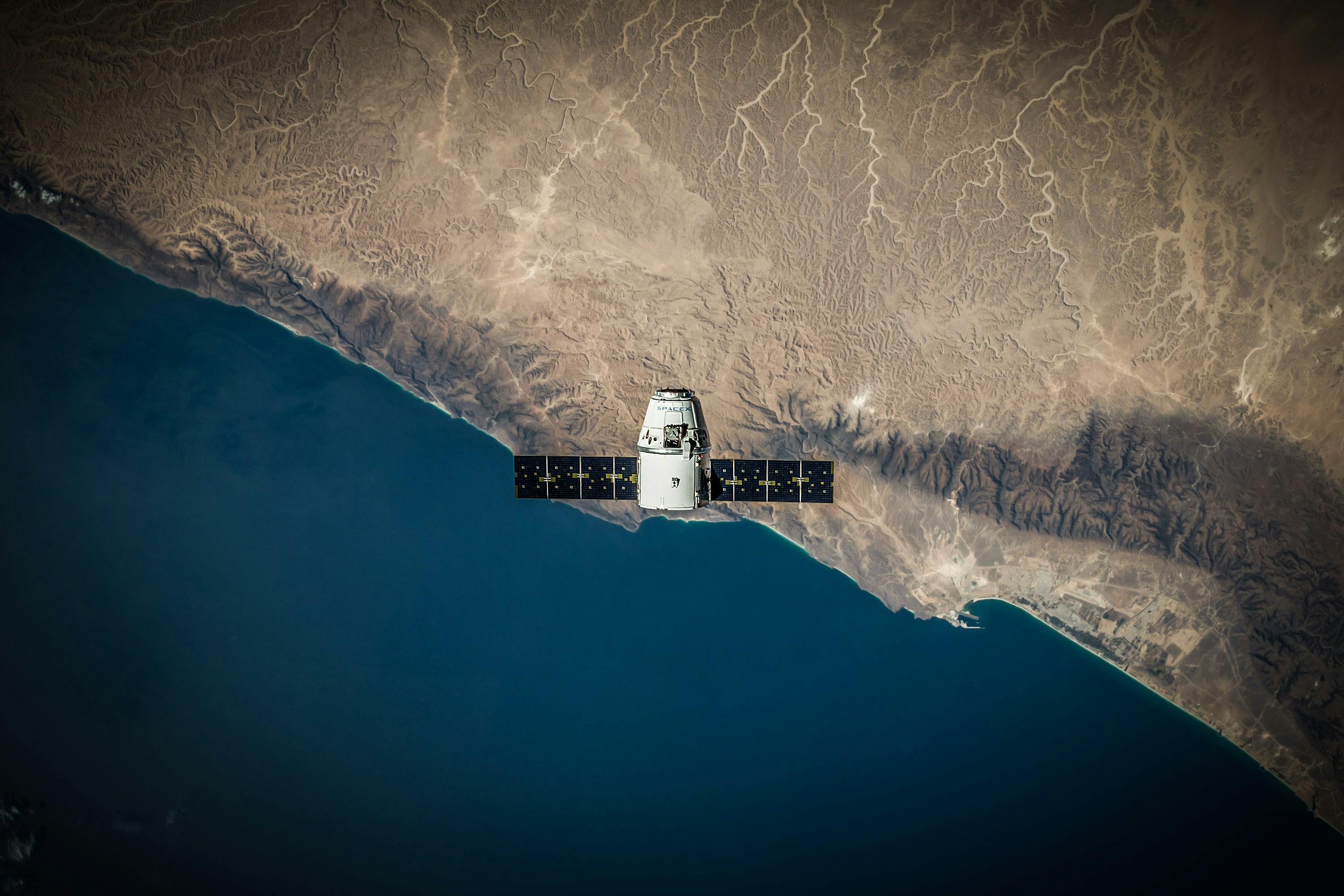
Emergency services would feel the impact quickly. Ambulances, fire crews, and police rely on GPS to reach people fast and to coordinate responses across multiple teams. Dispatch systems use location data to send the nearest available unit. Without GPS, response times would increase, coordination would suffer, and situational awareness would degrade at the moments when clarity matters most.
Modern agriculture is another often-overlooked dependency. Precision farming uses GPS-guided equipment to plant crops, apply fertilizer, and harvest efficiently. This reduces waste, saves fuel, and increases yields. A sustained GPS outage during critical farming seasons could disrupt food production, raise costs, and introduce inefficiencies that ripple through supply chains and ultimately affect food prices.
Even everyday digital conveniences would quietly degrade. Location-based services, ride-sharing apps, delivery tracking, fitness devices, and weather monitoring systems all rely on GPS data in some form. Individually, these disruptions might feel minor. Collectively, they would contribute to a sense that systems are unreliable, slower, and less trustworthy. Confidence in technology erodes quickly when basic expectations stop being met.
The real danger of GPS failure lies not in a single dramatic collapse, but in the slow accumulation of small failures across many systems. Each sector might have backups, but those backups often assume GPS is available most of the time. A prolonged or repeated outage would expose how deeply embedded satellite timing and positioning have become. It would force governments, companies, and infrastructure operators to rethink redundancy, diversify timing sources, and invest in alternatives that do not rely on a single global system.
GPS was designed as a navigation aid, but it evolved into a silent backbone of modern life. Its failure would remind us that some of the most critical technologies are the ones we barely notice at all, until they are gone.