Why Data Compression Is One Of The Most Important Inventions In Computing
by Scott
Data compression is so deeply embedded in modern computing that most people rarely notice it. Every time a photo loads instantly on a website, every time a movie streams smoothly across a continent, and every time a cloud backup completes in minutes instead of hours, compression is at work. It is one of the quiet foundational inventions that transformed computing from isolated machines into a globally connected digital ecosystem.
At its core, data compression is about representing information using fewer bits than its original form. To understand why this is possible, we need to begin with entropy. In information theory, entropy is a measure of uncertainty or randomness in data. If a message is highly predictable, it contains less information per symbol and can be encoded more efficiently. If it is completely random, it has high entropy and is far more difficult to compress.
Claude Shannon formalized this idea in the mid twentieth century, showing that there is a theoretical limit to how much a source of information can be compressed without losing data. This limit, known as the entropy rate, defines the minimum average number of bits needed to represent each symbol. Practical compression algorithms attempt to approach this limit by identifying patterns and statistical redundancies in data.
Lossless compression algorithms preserve the exact original data. When decompressed, the output is bit for bit identical to the input. This is essential for text files, executable programs, databases, and source code. Even a single bit error could corrupt a document or break a program. Lossless methods exploit redundancy in predictable ways. For example, if a text file contains many repeated letters or words, the algorithm can represent those repetitions more efficiently.
Huffman coding is a classic example of lossless compression. It assigns shorter binary codes to more frequent symbols and longer codes to less frequent ones. This simple idea reduces the average number of bits per symbol. More advanced techniques such as Lempel Ziv algorithms build dictionaries of repeated patterns and replace recurring sequences with references. Formats like ZIP and PNG rely on combinations of these methods.
Lossy compression takes a different approach. Instead of preserving every bit, it discards information that is considered perceptually insignificant. This is most common in audio, image, and video compression. Human perception is limited. We cannot detect every subtle variation in color or sound. Lossy algorithms exploit these limitations by removing data that is unlikely to be noticed.
In image compression, algorithms transform pixel data into frequency components. Many images contain smooth gradients and repeating textures. By converting spatial data into frequency space, such as with discrete cosine transforms, the algorithm can identify components that contribute less to perceived detail. These components can be quantized or removed, drastically reducing file size while maintaining acceptable visual quality. JPEG is a widely known example of this approach.
Video compression builds on similar principles but adds temporal redundancy. Consecutive video frames are often very similar. Instead of encoding each frame independently, video codecs encode key frames in full detail and then store only the differences between frames. Motion estimation and compensation techniques track moving objects across frames, allowing large portions of video data to be represented as changes rather than complete images. Modern codecs such as those used in streaming platforms rely on highly sophisticated predictive models to reduce bandwidth requirements.
Audio compression uses psychoacoustic models to determine which sounds are masked by louder frequencies. If two sounds occur at the same time and one is much louder, the quieter one may be imperceptible. Lossy audio formats remove or reduce these masked components. The result is dramatically smaller file sizes with minimal perceived quality loss.
Without compression, streaming media as we know it would not exist. Consider high definition video. Uncompressed, it requires enormous data rates that would overwhelm most consumer networks. Compression reduces these rates by orders of magnitude. A single high definition stream that might otherwise require hundreds of megabits per second can be delivered at a fraction of that. This efficiency allows millions of simultaneous streams across global networks.
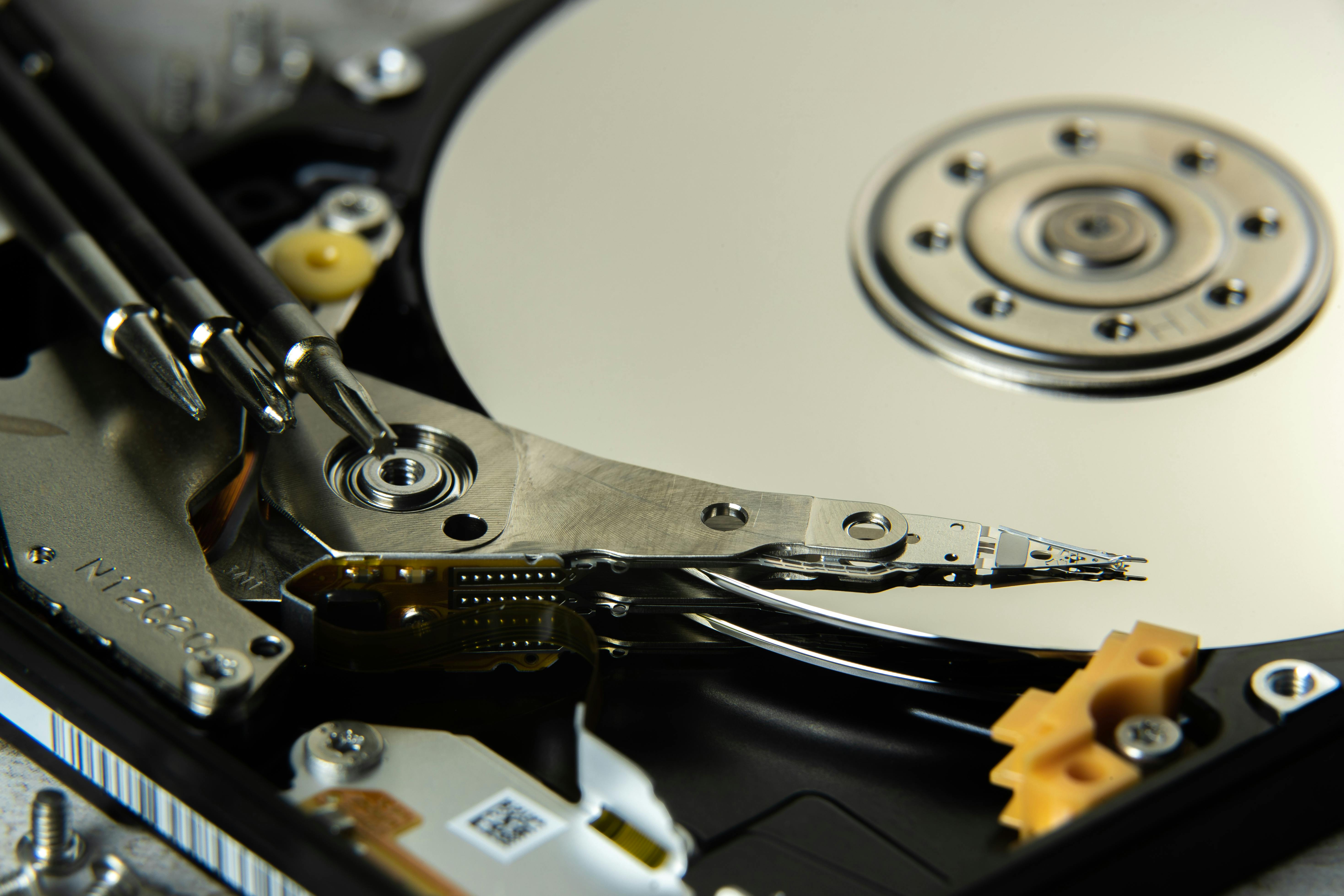
Cloud storage also depends heavily on compression. Data centers store exabytes of information. Even modest reductions in storage size translate into enormous savings in hardware, energy, and cooling. Compression reduces the physical storage footprint and the cost of replication across multiple geographic regions. When data is transmitted between data centers for redundancy or backup, compressed transfers reduce network load and latency.
Compression also enables faster data transfer in general computing. Smaller files move more quickly across networks and load more rapidly from disk. In mobile environments where bandwidth is limited and latency is high, compression improves user experience significantly. Web protocols often apply compression to HTML, CSS, and JavaScript before transmission. This reduces page load times and conserves bandwidth.
Modern distributed systems frequently combine compression with encryption. Data is typically compressed before being encrypted, since encryption produces high entropy output that cannot be compressed effectively. This sequencing is critical. Once data appears random, compression algorithms can no longer exploit patterns. The interplay between compression and cryptography illustrates how fundamental entropy is to both domains.
The importance of compression becomes even clearer when considering big data and machine learning. Training datasets can be enormous. Efficient storage and transmission are essential for collaboration and scalability. Even at the processor level, compression techniques are used in memory hierarchies and cache systems to increase effective capacity and reduce bandwidth pressure.
There are trade offs in every compression scheme. Lossless methods prioritize fidelity but may achieve modest size reductions depending on data entropy. Lossy methods achieve dramatic savings but at the cost of irreversible information loss. Computational complexity is another factor. Highly efficient compression may require significant processing power, which introduces latency or energy consumption concerns. Engineers must balance compression ratio, speed, and quality.
Over time, compression algorithms have become more adaptive and context aware. Early techniques relied on static statistical models. Modern algorithms build dynamic models that adapt to the data being processed. In video compression, encoders analyze scene complexity and motion patterns in real time to choose optimal encoding parameters. In cloud environments, systems may adjust compression strategies based on workload and storage characteristics.
As computing continues to expand into edge devices and global networks, compression remains a fundamental enabler. It reduces the cost of storage infrastructure, makes global streaming viable, accelerates data transfer, and allows constrained devices to participate in data rich ecosystems. It transforms redundancy into efficiency and noise into structure.
The deeper truth is that compression reflects a core principle of information itself. Real world data is rarely random. It contains patterns, structure, and predictability. Compression algorithms exploit that structure to represent information more efficiently. Without this insight, the modern internet would be slower, more expensive, and far less accessible.
Data compression is not merely a convenience. It is a foundational technology that underpins the scalability of modern computing. By harnessing the mathematics of entropy and the realities of human perception, it has allowed digital systems to grow beyond what raw bandwidth and storage alone would permit. It is one of the quiet achievements that made the information age possible.