Why CPUs Cannot Keep Increasing Clock Speeds Forever
by Scott
For decades, the simplest way to make a computer faster was to increase the clock speed of its central processing unit. A higher clock frequency meant more cycles per second, and more cycles meant more instructions could be executed. Through the 1990s and early 2000s, this strategy worked remarkably well. Processors climbed from tens of megahertz to multiple gigahertz in a relatively short span of time. At first glance, it seemed reasonable to assume that clock speeds would simply continue rising indefinitely. In reality, physics imposed limits that fundamentally changed the direction of processor design.
The most immediate barrier to ever increasing clock speeds is heat. Every time a transistor switches state, it consumes energy. In modern CPUs, billions of transistors switch billions of times per second. That activity generates power dissipation in the form of heat. The relationship between frequency and power consumption is not linear. Dynamic power consumption in CMOS circuits is approximately proportional to capacitance multiplied by the square of voltage multiplied by frequency. When clock frequency rises, voltage often must rise as well to maintain stable switching. Because power scales with the square of voltage, even small increases can cause dramatic increases in power consumption.
As clock speeds increased in the early 2000s, processors began approaching what engineers call the thermal wall. Cooling systems could no longer remove heat quickly enough to prevent temperatures from exceeding safe operating limits. Silicon transistors degrade at high temperatures. Excess heat accelerates electromigration in interconnects, weakens dielectric materials, and reduces overall reliability. Even with advanced heat sinks, fans, liquid cooling, and sophisticated packaging, there is a practical limit to how much heat can be dissipated from a small piece of silicon.
This thermal constraint is tied to power density. As fabrication processes shrank transistor dimensions, more transistors were packed into the same area. Although each transistor consumed less power individually, the overall density of switching activity increased. The result was localized hot spots within chips. Some regions of a processor could become significantly hotter than others depending on workload distribution. This created additional engineering challenges in thermal management and reliability.
Beyond heat, transistor leakage current became a critical factor. As transistors shrink into nanometer scales, their insulating barriers become extremely thin. Quantum mechanical effects begin to matter. Electrons can tunnel through thin gate oxides, leading to leakage currents even when a transistor is supposed to be off. This static power consumption does not depend on switching frequency. It occurs continuously as long as the transistor is powered. As process nodes became smaller, leakage current grew from a minor annoyance into a major contributor to total power consumption.
Higher clock speeds exacerbate leakage problems. Increased voltage and temperature both raise leakage currents. The system enters a feedback loop where higher frequency increases temperature, higher temperature increases leakage, and higher leakage increases power consumption and heat even further. At some point, the design becomes thermally unsustainable.
Signal integrity also becomes more difficult at higher frequencies. Electrical signals propagate through metal interconnects on the chip. As frequency increases, timing margins shrink. Even small variations in manufacturing, voltage fluctuations, or temperature changes can cause timing errors. The clock distribution network itself becomes a challenge. Distributing a high frequency clock signal across a large chip while maintaining synchronization consumes significant power and introduces jitter and skew. These factors limit how fast a globally synchronous clock can realistically operate.
Another barrier lies in memory latency. CPU cores operate much faster than main memory. Increasing clock speeds widens the gap between processor speed and memory access times. This is often referred to as the memory wall. Even if a CPU can execute instructions faster, it may spend much of its time waiting for data from memory. Cache hierarchies help mitigate this, but they introduce additional complexity and power consumption. Simply raising clock speed does not proportionally increase real world performance if memory subsystems cannot keep pace.
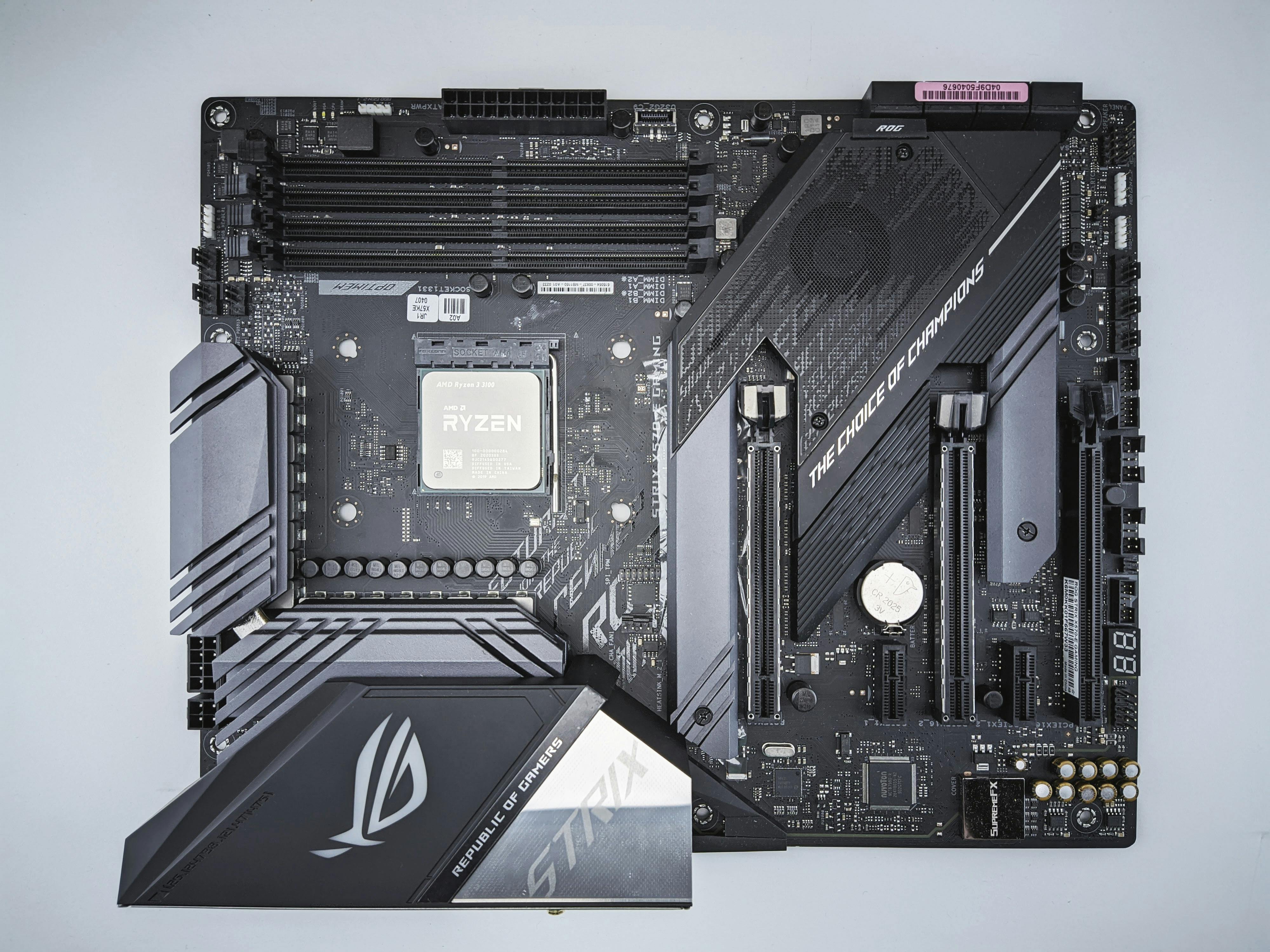
By the mid 2000s, these physical and architectural constraints forced a shift in design philosophy. Instead of pursuing ever higher clock frequencies, processor manufacturers began emphasizing parallelism. The idea was straightforward. Rather than making a single core run faster, place multiple cores on the same chip and allow them to work simultaneously.
Multi core architectures distribute workloads across several processing units. This approach improves performance without requiring dramatic increases in clock speed. If a task can be divided into parallel components, multiple cores can execute those components concurrently. While individual core frequencies plateaued around a few gigahertz, total computational throughput continued to rise because more cores were added.
This transition required changes not only in hardware but also in software. Traditional programs were often written with a sequential execution model in mind. To take advantage of multi core processors, software developers had to adopt concurrent programming techniques. Operating systems evolved to manage thread scheduling across multiple cores efficiently. Programming frameworks introduced abstractions for parallel execution. The industry gradually adapted to a world where performance gains depended on parallelism rather than raw clock speed.
At the same time, processor designers explored other techniques to improve efficiency. Out of order execution, speculative execution, and branch prediction were refined to extract more work per clock cycle. Vector instructions and SIMD extensions allowed single instructions to operate on multiple data elements simultaneously. Simultaneous multithreading enabled better utilization of execution units within a core. These architectural improvements focused on doing more useful work per cycle rather than simply increasing the number of cycles.
Energy efficiency also became a primary design goal. Dynamic frequency scaling allows processors to adjust clock speeds based on workload demands. When full performance is not required, frequency and voltage can be reduced to save power and limit heat generation. This approach recognizes that sustained maximum clock speeds are neither practical nor necessary for most workloads.
In high performance computing and data centers, parallelism extends beyond multi core processors. Systems combine thousands of cores across clusters of machines. Graphics processing units provide massive parallelism for workloads that can exploit it. Specialized accelerators handle tasks such as artificial intelligence inference and encryption more efficiently than general purpose cores.
The inability to increase clock speeds indefinitely is not a failure of engineering but a reflection of fundamental physical limits. Semiconductor devices operate within the constraints of thermodynamics, quantum mechanics, and materials science. As transistors approach atomic scales, new challenges emerge. Engineers continue to innovate with new materials, three dimensional transistor structures, and advanced packaging techniques, but the era of straightforward frequency scaling is over.
Modern computing performance advances through parallelism, specialization, and architectural efficiency rather than raw clock speed. The shift represents a maturation of processor design. Instead of relying on a single dimension of improvement, the industry now optimizes across multiple axes including energy efficiency, concurrency, and workload specific acceleration.
Clock speed increases once defined progress in computing. Today, the limits imposed by heat, leakage, and signal integrity have redirected that progress toward smarter, more efficient designs. The result is a computing landscape where performance growth continues, but through collaboration among many cores rather than the relentless ticking of a single ever faster clock.