Watching My Kids Learn Faster Than I Ever Did
by Scott
There are moments as a parent when you step back and quietly realise that something fundamental has shifted. For me, one of those moments is watching my kids learn. Not just learn differently, but learn faster. They grasp concepts earlier, connect ideas more naturally, and move through information with a confidence that still surprises me. It’s not that they’re smarter than past generations, but the environment they’re growing up in has changed the pace and shape of learning itself.
Children today are absorbing information at a speed that would have felt impossible when I was young. Questions don’t linger unanswered for long. Curiosity is met with immediate feedback, visual explanation, and interactive discovery. Where learning once relied heavily on memory and repetition, it now leans into understanding, exploration, and pattern recognition. Kids are encouraged to ask why earlier, and they’re often given the tools to find answers on their own.
A big part of this acceleration comes down to access. Technology has removed many of the barriers that once slowed learning. Educational apps, videos, games, and interactive lessons turn abstract ideas into something tangible. A child can watch a concept unfold visually, hear it explained in different ways, and then immediately apply it. Learning is no longer confined to a classroom or a specific time of day. It happens constantly, often without the child even realising they’re being taught.
What fascinates me most is the way kids approach memory and problem solving now. They don’t always memorise facts the way I was taught to. Instead, they learn how to find, connect, and apply information. They use mental shortcuts, visual cues, and contextual understanding. They remember where to look rather than storing everything internally. This isn’t laziness, it’s adaptation. Their brains are being trained to navigate systems, recognise patterns, and switch between tasks fluidly.
Technology plays a huge role in shaping this behaviour. Touchscreens, voice assistants, and interactive tools make learning feel intuitive. Kids learn through doing rather than just listening. They experiment, make mistakes quickly, and adjust without fear. Feedback is immediate, and progress is visible. This constant loop of action and response reinforces learning in a way that worksheets never could.
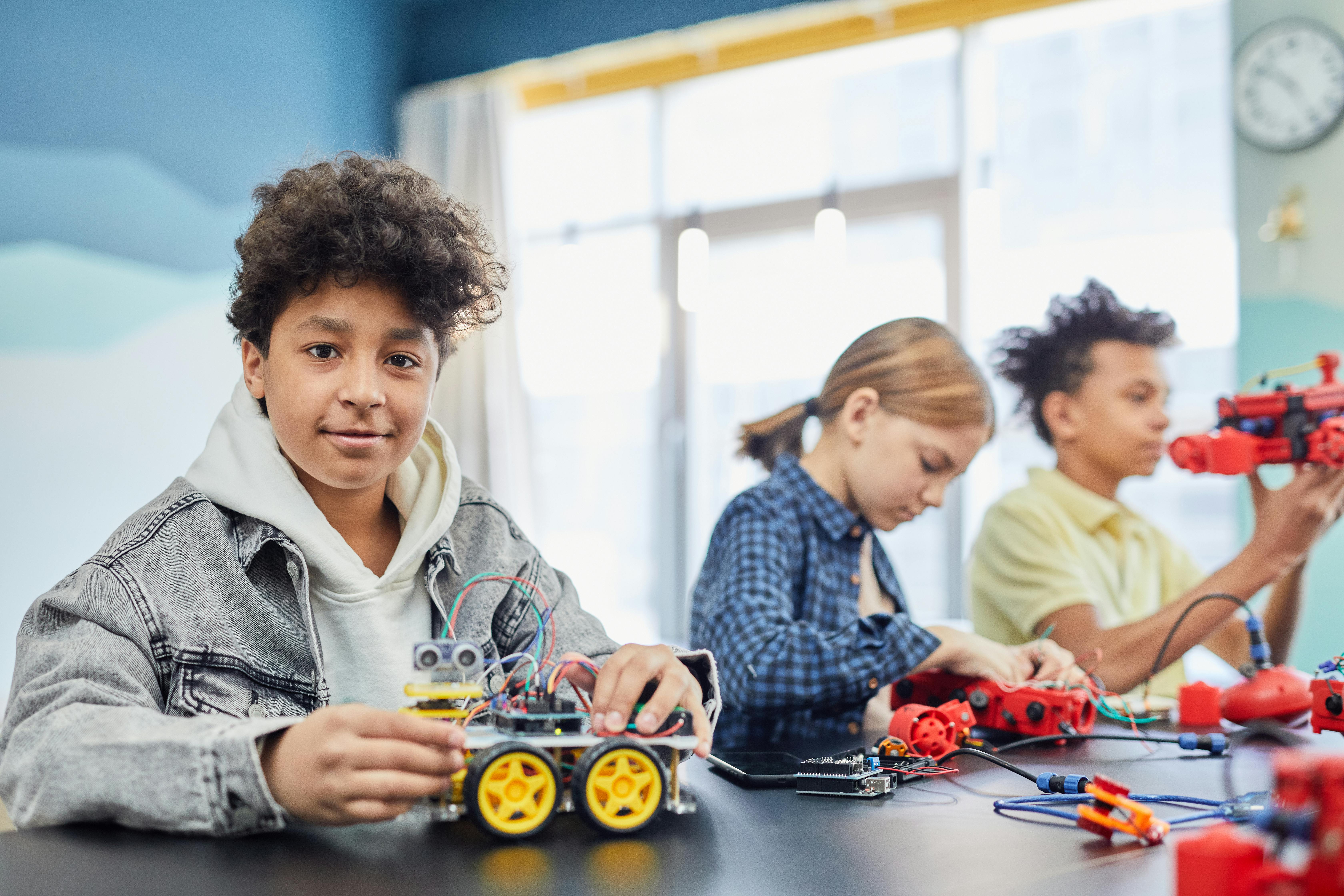
When I think back to my own childhood, the contrast is striking. If I wanted to see pictures of animals, I needed to borrow a book from the school library and hope it had what I was looking for. If I wanted to speak to my father while he was at work, I had to use the landline telephone and speak to whoever answered first. Watching a movie meant loading a tape into a VHS player and rewinding it afterward. Information was slower, heavier, and far less flexible.
Even the physical environment was different. I didn’t grow up with air conditioning, so summers were spent finding shade or water. I rode my bike and skateboard around the neighbourhood freely, largely uninterrupted by strangers or constant supervision. Learning came from experience, trial and error, and long stretches of unstructured time. It built independence, but it also meant that knowledge travelled at a slower pace.
The world my kids are growing up in is more connected, more structured, and more aware. Despite common assumptions, I often notice that kids today are better behaved than many were in the 90s. They’re more accustomed to rules, routines, and social expectations. They understand consequences earlier, partly because systems around them are clearer and more consistent. They navigate both physical and digital spaces with a kind of cautious confidence.
All of these changes come together to explain why kids seem to be learning faster. They’re supported by technology that amplifies curiosity instead of limiting it. They’re exposed to information earlier, in richer formats, and with fewer obstacles. They’re taught how to learn, not just what to learn. Their environment rewards exploration and adaptability, skills that compound over time.
Watching this unfold as a parent is both inspiring and humbling. It reminds me that learning isn’t static, and intelligence isn’t fixed. The tools we grow up with shape how we think, how we solve problems, and how quickly we move forward. My kids aren’t racing ahead because the world demands it, they’re doing it because the world finally knows how to support learning at their pace.