The Significance of Creating Electronics That Can Be Repaired
by Scott
There is a drawer in many households that contains the quiet evidence of a broken promise. Inside it you might find a smartphone with a shattered screen that never got fixed, a pair of wireless earbuds with a battery that stopped holding a charge, a tablet whose connector port became unreliable after two years of daily use. These objects are not garbage in any intuitive sense. They are sophisticated, expensive pieces of technology that stopped functioning because of a single failed component, and they sit in drawers or end up in landfills because the cost or practical difficulty of fixing them exceeded whatever value their owners could extract from continuing to use them. The accumulation of those drawers, multiplied across hundreds of millions of households, represents one of the most significant and underexamined problems in the history of consumer technology.
The question of whether electronics should be designed to be repaired is sometimes framed as a niche concern, a hobby horse of environmentalists or a technical debate for engineers. It is neither. It is a question that touches on environmental sustainability, economic fairness, technological autonomy, the structure of corporate power, and the long-term relationship between human beings and the objects they depend on. The answer to that question, and the choices that manufacturers make in response to it, will shape the material landscape of the twenty-first century in ways that are only beginning to be understood.
To appreciate how significant the shift toward unrepairable electronics has been, it helps to remember that repairability was once simply assumed. For most of the twentieth century, the expectation that a broken appliance or device could be fixed was embedded in everyday consumer culture. There were television repair shops, radio repair shops, and appliance repair services in virtually every town of any size. Vacuum tubes burned out and were replaced. Capacitors failed and were soldered in. Motors wore out and were swapped. The economy of repair was not marginal. It was a normal part of how people related to the objects in their lives.
The shift began gradually in the 1980s and accelerated dramatically through the 1990s and 2000s as electronics became simultaneously cheaper to manufacture and more complex in their construction. As the price of consumer electronics fell, the economic calculus of repair began to change. If a new device cost only slightly more than the labor required to fix an old one, the repair often stopped making financial sense, at least in markets where labor costs were high. Manufacturers, for their part, discovered that a consumer who could not repair a device was a consumer who would eventually buy a new one. The incentive structure of the industry gradually aligned against repairability without anyone necessarily deciding in a single moment to make it so.
But the economics of falling prices only partially explain what happened. The more consequential shift was a design philosophy that actively made repair difficult, not as a side effect of miniaturization or technical complexity, but as a deliberate choice. Batteries began to be glued rather than screwed into place. Components that had historically been modular were integrated into single assemblies that could not be partially replaced. Screws were replaced with proprietary fasteners that required special tools. Software locks were added that could detect unauthorized component replacements and disable device functions as a result. Spare parts were withheld from independent repair technicians. Diagnostic tools were restricted to authorized service networks. Each of these choices, taken individually, could be justified on some technical or aesthetic grounds. Taken together, they constituted a systematic dismantling of the consumer’s ability to maintain the objects they owned.
The consequences of this shift are now playing out at a scale that demands serious attention. Electronic waste, commonly called e-waste, is the fastest-growing waste stream in the world. The United Nations has reported that tens of millions of metric tons of electronic waste are generated globally every year, and that figure has been climbing steadily. A significant portion of this waste consists of devices that were functional except for a single failed component, or devices that were discarded because software stopped being supported and the hardware could not be updated, or devices that were replaced simply because the cost of repair exceeded a threshold that manufacturers had effectively set through their design choices. The environmental consequences are severe. Electronic devices contain a complex mixture of materials, including valuable metals like gold, silver, copper, and rare earth elements, as well as toxic substances including lead, mercury, cadmium, and flame retardants. When these devices are not properly recycled, which is the fate of the majority of e-waste globally, they leach toxic materials into soil and groundwater and represent a permanent loss of finite material resources.
The material cost of manufacturing electronics is also enormously higher than most consumers realize. The energy required to manufacture a smartphone, for example, is dominated not by the years of charging the device requires during its operational life, but by the manufacturing process itself. Mining raw materials, refining them, fabricating components, and assembling finished devices requires staggering amounts of energy and water. Research has consistently shown that extending the useful life of an electronic device by even one or two years can reduce its total environmental impact dramatically, because it defers or eliminates the need to manufacture a replacement. Repairability is, from an environmental perspective, not simply a nice feature. It is one of the most effective levers available for reducing the footprint of consumer electronics.
Beyond the environmental case, the economic argument for repairable electronics is compelling and often overlooked. The shift toward disposable electronics has not been neutral in its effects across different economic groups. For households with comfortable incomes, the inconvenience of an unrepairable device is real but manageable. The device gets replaced, the cost is absorbed, and life continues. For households with limited incomes, the same situation can represent a genuine hardship. A broken smartphone is not merely an inconvenience in a world where smartphones serve as the primary interface for job applications, banking, healthcare navigation, and social connection. When a device fails and cannot be economically repaired, the gap between those who can absorb the replacement cost and those who cannot becomes a gap in access to the basic infrastructure of modern life.
Independent repair businesses occupy an important place in this economic landscape that is easy to underestimate. Before manufacturers began systematically restricting repair, a robust ecosystem of independent technicians existed in most communities. These businesses provided affordable repair services, extended the useful life of devices, and created skilled employment. The restrictions that manufacturers have imposed on parts availability, diagnostic tools, and software have not merely inconvenienced individual consumers. They have systematically dismantled a category of small business that served an economically valuable function. In many cases, the restrictions have funneled repair revenue toward manufacturer-controlled service networks that charge substantially more than independent technicians and are less conveniently located for many consumers.
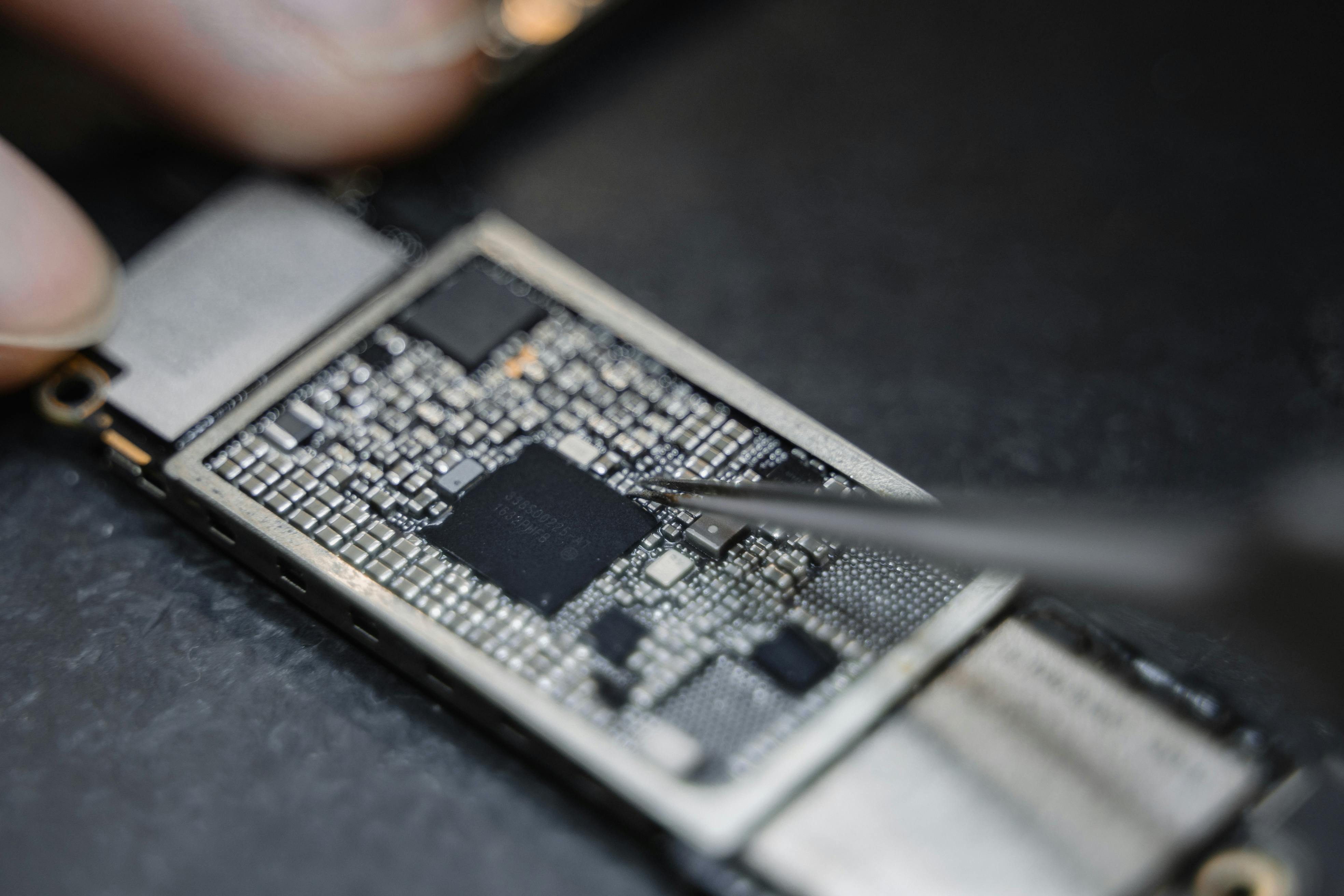
The right to repair movement, which has grown significantly in visibility and political influence over the past decade, has framed these issues in terms of property rights and consumer autonomy. The central argument is straightforward: if you buy an object, you should have the right to fix it. This argument has a philosophical resonance that extends well beyond electronics. The notion that purchasing an object confers meaningful ownership over it, including the right to maintain and modify it, is deeply embedded in common intuitions about property. The idea that a manufacturer could continue to exercise control over how you use and maintain a physical object after you have paid for it represents a significant departure from traditional understandings of ownership, one that happened gradually and without much public deliberation.
Manufacturers have pushed back against repair advocacy with several arguments. They have claimed that allowing unauthorized repair creates safety risks, that proprietary components are necessary to ensure device quality and performance, and that software locks protect intellectual property and prevent the installation of counterfeit or substandard parts. Some of these concerns have genuine merit in specific contexts. A poorly repaired medical device or a counterfeit battery installed in a device not designed for it can create real hazards. But critics of these arguments, and there are many credible ones, note that they are frequently deployed not in situations where safety is genuinely at stake but as generic justifications for restrictions that primarily serve to protect manufacturer revenue rather than consumer welfare. The safety argument, in particular, has been characterized by repair advocates as a solution in search of a problem, given that independent repair has existed for most of the history of consumer electronics without producing a documented epidemic of repair-related injuries.
Some manufacturers have begun responding to repair pressure, partly because of genuine philosophical reconsideration and partly because of legislative trends that have made the status quo increasingly untenable. Several jurisdictions, including the European Union and a growing number of American states, have passed or are actively considering right to repair legislation that would require manufacturers to make spare parts, diagnostic tools, and repair documentation available to independent technicians and consumers. These legislative efforts represent a significant shift in the political conversation around electronics design, one that manufacturers with large consumer-facing businesses can no longer easily ignore.
Companies like Fairphone, a Dutch manufacturer that has built its entire brand identity around repairability and ethical sourcing, have demonstrated that making a repairable smartphone is technically feasible and commercially viable. Fairphone devices are designed from the ground up to be disassembled by ordinary users without special tools, with modular components that can be replaced individually. The batteries, screens, cameras, and charging ports can all be swapped by a consumer with a standard screwdriver and a few minutes of time. The company has consistently sold out of devices and maintained a devoted customer base, providing direct evidence that there is meaningful consumer demand for repairable electronics when such products exist and are marketed transparently.
Framework, an American laptop company founded in 2020, has taken a similar approach to personal computers, building modular laptops in which virtually every component can be replaced or upgraded by the user. The company sells spare parts directly to consumers and publishes detailed repair guides. The laptops have received enthusiastic reviews not only from consumers who value repairability but from technology reviewers who assessed them purely on their merits as computing devices. Framework’s success suggests that the conventional industry wisdom, which held that consumers would always prefer thinner and lighter over repairable, was either incorrect or applied only when repairability was not marketed as a genuine value proposition.
The engineering challenges of building repairable electronics are real but frequently overstated. There are genuine tensions between miniaturization and modular design, and between waterproofing and ease of disassembly. A device that can be taken apart by a consumer with a screwdriver is harder to seal against water intrusion than one that is assembled with adhesive. A device with modular components will typically be slightly thicker or heavier than one with all components integrated onto a single board. These tradeoffs exist and should be acknowledged honestly. But the degree to which they are cited as reasons for making devices essentially irreparable often seems disproportionate to the actual engineering constraints involved. When a manufacturer chooses to use proprietary screws rather than standard ones, the decision is not driven by engineering necessity. It is driven by a desire to restrict the repair ecosystem. When software is written to detect component replacements and degrade device functionality, the decision is not a response to technical constraints. It is a policy choice dressed up as an engineering requirement.
The conversation about repairability also has important implications for the relationship between consumers and software, a dimension that is sometimes overlooked in discussions focused primarily on hardware. Modern electronics are inseparable from the software that runs them, and manufacturers have used software as a powerful tool for extending control over devices long after sale. Software updates can slow down older devices, remove features, or render hardware incompatible with current services. Software locks can prevent the installation of alternative operating systems or firmware that might extend a device’s useful life. The right to repair, understood broadly, includes not just the right to replace a battery or a cracked screen but the right to run whatever software you choose on hardware you own, including software that the original manufacturer might prefer you not run because it would compete with their services or extend the life of a device they would prefer you replace.
There is a broader cultural dimension to repairability that deserves attention. The shift toward disposable electronics has not merely changed the economics of consumption. It has changed the relationship between people and the objects they depend on. When objects can be repaired, understood, and maintained, they tend to be treated as durable goods with ongoing relationships to their owners. When objects are sealed, opaque, and designed to be replaced rather than fixed, they become more like consumables, interchangeable and disposable in a way that encourages a fundamentally different psychological relationship. The person who can open their laptop and replace a failing drive, who understands what the components do and how they relate to each other, has a different and arguably richer relationship to that object than the person who treats it as a black box to be replaced when it fails.
This is not merely a sentimental observation. Research on consumer behavior and environmental psychology has consistently found that people who have repaired, modified, or built objects tend to assign them higher value and hold onto them longer. The IKEA effect, the well-documented tendency for people to value things they have helped create more highly than identical things they simply purchased, has an analog in the domain of repair. Objects that have been fixed and maintained accumulate a kind of personal history that disposable objects cannot acquire. The worn hinge on a repaired laptop, the replaced screen on a phone that survived a serious drop, these are not just functional objects. They are objects with stories, objects whose continued existence represents a small act of resistance against the culture of disposability.
The significance of repairable electronics, then, is not a narrow technical question. It is a question about what kind of relationship we want to have with the material world, about who should bear the environmental costs of consumer technology, about whether economic structures should protect consumers or extract from them, and about the basic principle that ownership should mean something real. The momentum behind right to repair legislation, the commercial success of companies that have committed to repairability as a design principle, and the growing consumer awareness of these issues all suggest that the conversation is shifting. Whether it shifts far enough and fast enough to meaningfully change the dominant design philosophy of the electronics industry remains to be seen. But the argument for building things that last, things that can be understood and maintained and fixed, is one that does not require technical expertise to appreciate. It is, at its core, an argument about respect. Respect for the people who buy and depend on these devices, respect for the workers who mine the materials they contain, and respect for the planet that will ultimately absorb whatever we cannot figure out how to keep working.