The History of Radio From Early Experiments to Modern Wireless Technology
by Scott
The history of radio is a story of curiosity, experimentation, global communication, and quiet revolution. Long before radio became a household appliance or a background companion in cars and workplaces, it began as a scientific question: could invisible waves carry information through space without wires? The journey from that question to today’s digital, satellite-based, and software-defined radio systems spans more than a century and mirrors the broader evolution of modern technology itself.
The foundations of radio can be traced back to the early nineteenth century, when scientists first began to understand electricity and magnetism as related forces. In the 1830s and 1840s, experiments with electromagnetism revealed that electrical currents could create magnetic fields and vice versa. These discoveries laid the groundwork for a deeper understanding of how energy could propagate through space. Theoretical work in the 1860s showed that electromagnetic waves should exist and travel at the speed of light, even though no one had yet observed them directly.
In the late 1880s, experimental proof finally arrived. Researchers demonstrated that electromagnetic waves could be generated, transmitted, and detected over short distances. These early experiments did not carry voice or music, but they proved that wireless signaling was possible. Sparks generated by electrical equipment produced bursts of radio-frequency energy, and simple receivers could detect those bursts. This marked the true birth of radio as a physical phenomenon rather than just a theory.
The next major leap came in the 1890s, when practical communication systems began to emerge. Innovators developed ways to send coded signals wirelessly over increasing distances, using antennas and tuned circuits to improve range and reliability. Morse code became the first widely used radio language, enabling ships and shore stations to communicate without physical connections. This was revolutionary for maritime safety and navigation, as vessels could now send distress signals and receive warnings while at sea.
As the twentieth century began, radio rapidly transitioned from experimental technology to critical infrastructure. Wireless telegraphy spread across shipping routes, military operations, and remote outposts. Governments and commercial operators invested heavily in powerful transmitters and sensitive receivers. Long-distance radio communication made it possible to span oceans, shrinking the world in ways previously unimaginable. During this period, radio was still primarily about point-to-point communication rather than broadcasting to the public.
The 1910s and 1920s marked a turning point when radio moved into homes. Advances in vacuum tube technology made it possible to amplify weak signals and transmit continuous audio rather than simple on-off pulses. This enabled voice and music to be broadcast to large audiences simultaneously. The first radio broadcasts sparked public fascination, and soon households began purchasing receivers to listen to news, entertainment, and cultural programming. Radio became a shared experience, connecting communities through sound.
Throughout the interwar years, radio matured into a dominant mass medium. Stations proliferated, networks formed, and programming became more sophisticated. Live music, serialized dramas, comedy shows, and news reports filled the airwaves. Radio shaped public opinion and culture, influencing everything from politics to popular music. It was during this era that radio became deeply woven into daily life, often serving as the primary source of real-time information.
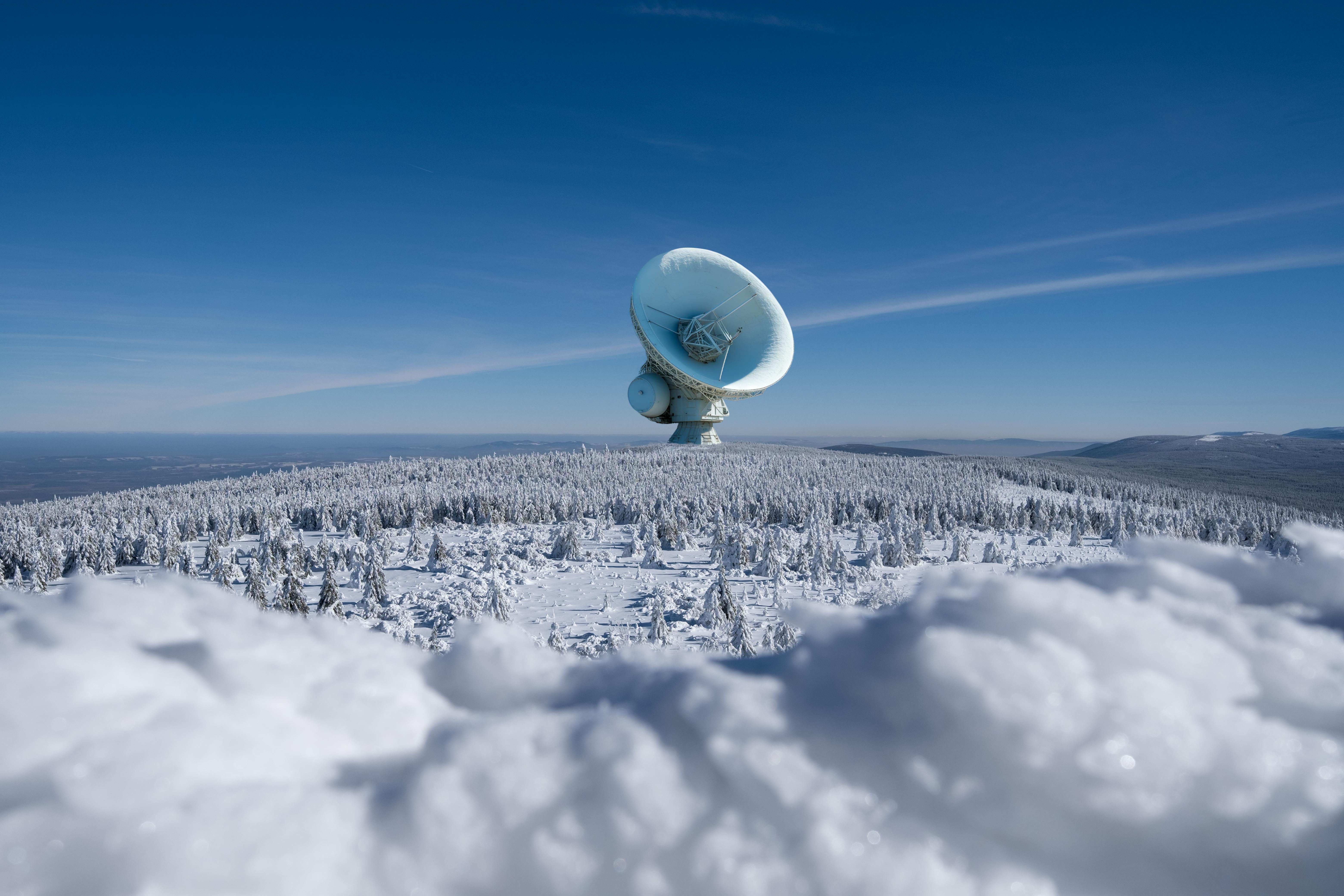
World War II underscored radio’s strategic importance. Radio technology was central to military communications, navigation, intelligence gathering, and coordination. Portable radios allowed troops to receive orders in the field, while radar systems, derived from radio principles, transformed air and sea defense. The war accelerated innovation, leading to improvements in reliability, miniaturization, and frequency management. After the war, many of these advances flowed into civilian use.
The postwar decades saw radio diversify and specialize. Frequency modulation, or FM radio, offered higher audio quality and reduced interference compared to earlier systems. This made it ideal for music broadcasting, while AM radio remained strong for talk, news, and long-distance coverage. Car radios became standard equipment, turning radio into a companion for travel and commuting. At the same time, two-way radio systems expanded in industries such as aviation, emergency services, and transportation.
As television emerged in the mid-twentieth century, some predicted the decline of radio. Instead, radio adapted. It became more localized, more mobile, and more personal. Transistor technology replaced bulky vacuum tubes, enabling portable radios powered by batteries. People could now carry radio with them, listening on beaches, in parks, and on the move. This portability reinforced radio’s role as an ever-present medium.
The latter half of the twentieth century introduced increasingly complex radio technologies. Satellite communication extended radio signals beyond the limits of Earth-based transmitters, enabling global broadcasts and precise navigation systems. Cellular networks used radio frequencies to connect mobile phones, transforming personal communication. At the same time, digital signal processing began to replace analog techniques, allowing more efficient use of spectrum and improved signal quality.
By the late twentieth and early twenty-first centuries, radio had become largely invisible to everyday users, even as its importance grew. Wireless networking, Bluetooth, GPS, and mobile data all rely on radio waves operating across different frequency bands. Modern radios are often embedded in chips and software rather than standalone devices. Software-defined radios allow a single piece of hardware to perform many roles, adapting to different protocols and standards through code.
Today, radio underpins nearly every aspect of modern connectivity. It enables global positioning, emergency communications, remote sensing, satellite internet, and the vast ecosystem of wireless devices that define contemporary life. Even as streaming services and digital platforms dominate content delivery, traditional radio broadcasting remains resilient, valued for its simplicity, reach, and reliability during emergencies.
Looking back, the history of radio is not just a technical timeline but a human one. It reflects our desire to communicate across distance, to share information instantly, and to connect communities without physical barriers. From sparks in early laboratories to the silent radio links inside smartphones and satellites, radio has evolved continuously while remaining fundamentally the same: energy traveling invisibly through space, carrying meaning from one place to another. Its story is far from over, and as technology advances, radio will continue to adapt, quietly supporting the systems that hold the modern world together.