The History Of How The Internet Began
by Scott
The story of how the Internet started is not a single invention or moment, but a long chain of ideas, experiments, and needs that slowly converged into the global network we rely on today. It began not as a commercial product or social platform, but as a response to a very real problem: how to share information reliably across distance, even if parts of the system failed.
In the late 1950s and early 1960s, computers were massive, expensive machines used primarily by governments, universities, and large corporations. These computers did not communicate with one another. Each was an isolated island of processing power, and sharing data usually meant physically moving punch cards, magnetic tape, or printouts from one location to another. As computing grew more important, so did the desire to connect these machines together.
The Cold War played a major role in shaping early networking ideas. In the United States, concerns about communication systems surviving a potential attack led researchers to explore decentralized networks. The idea was simple but radical for its time: instead of relying on a single central communication point, information could be broken into small pieces and routed dynamically across multiple paths. If one route failed, the data could find another way through.
This concept became known as packet switching. Instead of sending a continuous stream of data over a fixed line, messages would be divided into packets, each carrying destination information. These packets could travel independently across a network and be reassembled at the destination. This approach was more efficient and far more resilient than traditional circuit-switched communication used by telephone systems.
In the late 1960s, these ideas materialized in a project funded by the U.S. Department of Defense’s Advanced Research Projects Agency. The result was ARPANET, often considered the direct ancestor of the modern Internet. ARPANET connected a small number of research institutions, allowing them to share computing resources and collaborate remotely. In 1969, the first successful message was sent between computers at UCLA and Stanford. The system crashed after the first few characters, but history had begun.
Throughout the 1970s, ARPANET expanded, and researchers began to experiment with different kinds of networks. Some used radio links, others used satellite connections. The challenge became not just connecting computers, but connecting different networks together. A network of networks required a common language that all systems could understand.
That language emerged in the form of TCP and IP, protocols developed to handle reliable data transmission and addressing across diverse networks. TCP ensured that data arrived intact and in order, while IP handled routing packets to the correct destination. Together, they allowed any compatible network to connect to any other, regardless of underlying hardware.
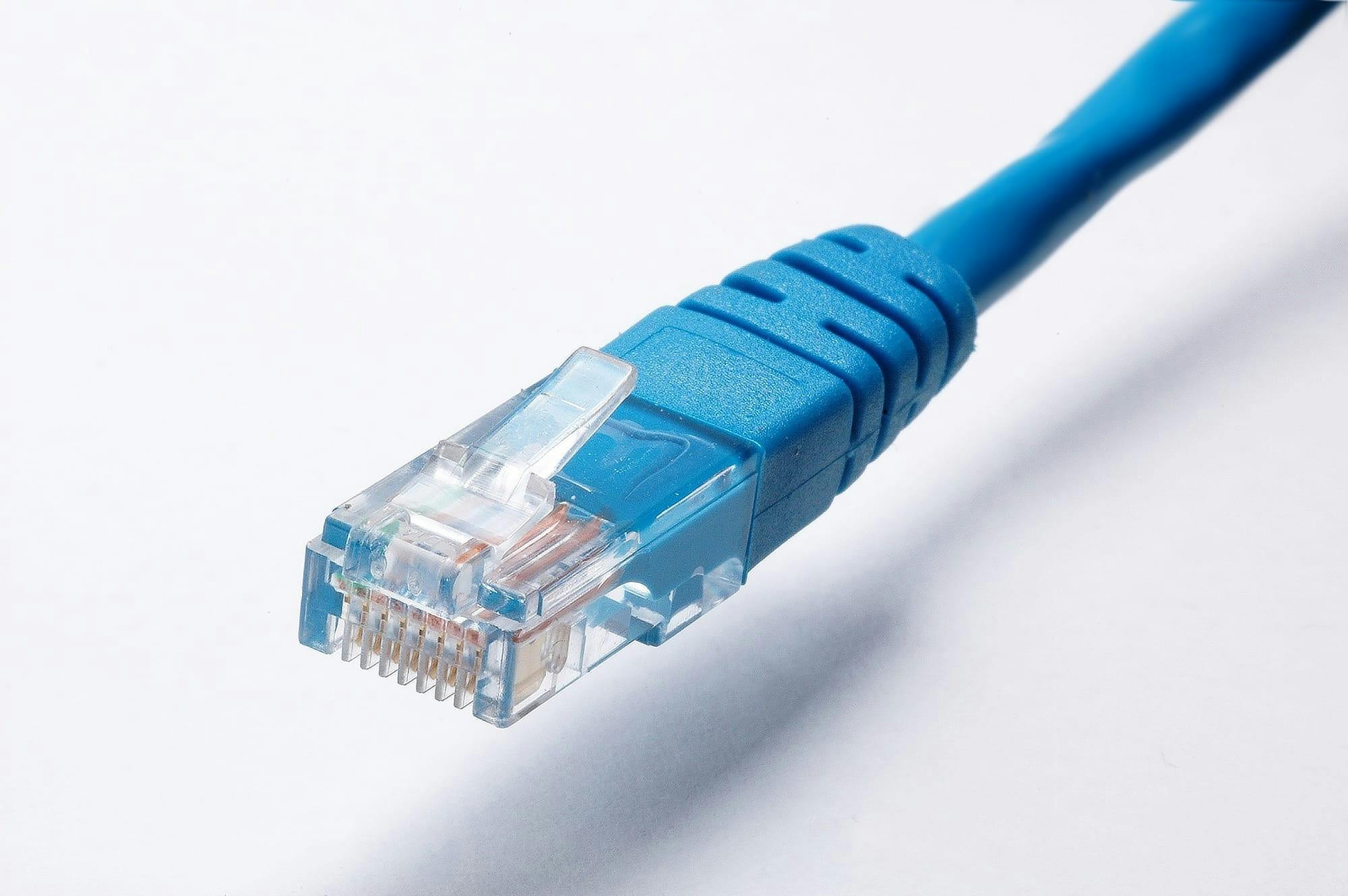
On January 1, 1983, ARPANET officially transitioned to TCP/IP, a moment often considered the birth of the Internet as we know it. From that point forward, independent networks could join a growing global system simply by adopting the shared protocols. The Internet was no longer a single project, but an open framework.
As the Internet grew, new services emerged to make it more useful. Email became one of the earliest and most popular applications, fundamentally changing how people communicated. File transfer systems allowed researchers to share software and data. Discussion forums and early messaging systems created the foundations of online communities long before social media existed.
During the late 1980s and early 1990s, another major shift occurred. Until then, the Internet was largely confined to academic and government use. Restrictions on commercial activity began to loosen, and private organizations started connecting their own networks. Around the same time, a simple system for navigating information using linked documents was developed, which would soon be known as the World Wide Web.
The Web transformed the Internet from a technical tool into something accessible to the general public. With graphical browsers and clickable links, users no longer needed specialized knowledge to explore online information. Websites multiplied rapidly, and the Internet began to enter homes through dial-up connections, accompanied by the distinctive sounds many still remember.
By the late 1990s and early 2000s, the Internet had become a global phenomenon. Broadband connections replaced dial-up, multimedia content became common, and online services expanded into commerce, entertainment, and communication. What started as a research network evolved into critical infrastructure underpinning modern life.
Today’s Internet bears little resemblance on the surface to its early form, yet many of its core principles remain unchanged. Packet switching, decentralized routing, and open protocols still form the backbone of global connectivity. Behind streaming video, cloud services, and instant messaging lies the same fundamental architecture conceived decades ago.
The Internet’s origin story is one of collaboration rather than competition, and resilience rather than central control. It was shaped by engineers solving practical problems, often without knowing how profoundly their work would affect the world. What began as a way to share computing power became a system that reshaped communication, culture, commerce, and knowledge itself, quietly weaving its way into nearly every aspect of modern life.