The Hidden Technology That Powers Global Financial Markets
by Scott
Financial markets often appear abstract. Numbers move across screens, prices rise and fall, and billions of dollars change hands in fractions of a second. Behind those movements lies an immense technological infrastructure that quietly supports global trading. Financial markets are not just economic systems. They are vast distributed computing platforms that combine telecommunications networks, high performance data processing, advanced mathematics, and carefully engineered redundancy.
At the foundation of modern financial markets is connectivity. Markets operate continuously across continents and time zones, and institutions rely on extremely reliable network infrastructure to transmit market data and execute trades. Stock exchanges, banks, hedge funds, and trading firms connect through specialized networks designed for both speed and resilience. Fiber optic links carry enormous volumes of information between financial centers such as New York, London, Tokyo, Singapore, and Chicago.
Speed matters enormously in these environments. High frequency trading firms invest heavily in low latency connectivity because the difference between success and failure can be measured in microseconds. Microwave radio links are sometimes used between cities because signals traveling through air can arrive slightly faster than those traveling through fiber. In certain routes between financial hubs, specialized communication towers form microwave relay networks designed solely to shave milliseconds from transmission times.
Despite the emphasis on speed, reliability is even more critical. Financial infrastructure must operate with extremely high availability because even brief outages can disrupt markets or lead to enormous financial losses. Data centers that host financial systems are designed with multiple layers of redundancy. Power is delivered through dual feeds, backed by uninterruptible power supplies and diesel generators. Network connections are duplicated across multiple carriers and physical routes. Storage systems replicate data across multiple locations so that failures do not interrupt operations.
At the heart of financial systems are transaction engines that process trades. When a buy order meets a sell order on an exchange, the matching engine must determine execution priority, update order books, record the transaction, and distribute updated market data to participants. These systems process extraordinary volumes of messages. Major exchanges can handle millions of order events per second during periods of heavy trading.
To achieve this performance, trading platforms rely on highly optimized software running on specialized hardware. Matching engines are written in extremely efficient programming languages and often run on systems with carefully tuned operating systems that minimize scheduling delays. Some platforms use kernel bypass networking technologies that allow applications to communicate directly with network interfaces without the overhead of traditional operating system networking stacks.
Storage technology also plays a crucial role in financial infrastructure. Every transaction must be recorded accurately and preserved for regulatory and auditing purposes. High performance databases maintain order books and historical trading records. These systems often use solid state storage and in memory databases to ensure that critical data can be accessed with minimal latency. At the same time, long term archives maintain massive historical datasets used for compliance, research, and algorithmic trading analysis.
Redundancy extends beyond hardware and networking. Entire trading platforms often exist in multiple geographically separated facilities. If one data center becomes unavailable due to power failures, natural disasters, or other disruptions, operations can fail over to backup locations. Exchanges conduct regular disaster recovery tests to verify that systems can continue functioning even if primary facilities are lost.
Financial technology also relies heavily on cryptography and secure communication protocols. Transactions involve sensitive information and must be protected from tampering or interception. Encryption ensures that market participants can exchange information securely across global networks. Digital signatures verify the authenticity of messages and protect against fraudulent order submissions.
The underlying science of finance itself is intertwined with technology. Mathematical models are used to analyze market behavior, price derivatives, and evaluate risk. These models rely on enormous computational power. Large investment firms operate clusters of servers that perform complex simulations and statistical analysis on vast datasets. Machine learning techniques are increasingly used to detect trading patterns, manage portfolios, and identify potential fraud.
Concepts such as compound interest, inflation, and dividend distribution are also embedded within financial systems through automated software. Banking systems calculate interest accumulation over time based on precise algorithms that account for compounding intervals and account balances. Dividend payments from publicly traded companies are processed through clearing systems that distribute funds to millions of shareholders. These operations are handled by large scale financial software platforms that integrate accounting, regulatory reporting, and transaction management.
Clearing and settlement systems form another critical layer of financial infrastructure. When a trade occurs on an exchange, the transfer of ownership and funds does not always happen instantly. Clearinghouses act as intermediaries that ensure both parties fulfill their obligations. They manage risk by requiring collateral and by tracking outstanding obligations across the market. Settlement systems then finalize the transfer of securities and payments, often using centralized financial messaging networks.
Financial messaging networks themselves represent another complex technological ecosystem. Systems used by banks and financial institutions allow secure communication of payment instructions, confirmations, and regulatory reports. These networks operate under strict reliability and security requirements because they facilitate trillions of dollars in daily financial flows.
Market data distribution is also a significant technical challenge. Exchanges generate enormous streams of real time data containing price updates, trade confirmations, and order book changes. This information must be delivered to thousands of trading firms, data vendors, and financial institutions around the world. Specialized multicast distribution systems transmit these feeds efficiently to large numbers of subscribers simultaneously.
Algorithmic trading platforms process these data streams in real time. Sophisticated algorithms monitor market conditions, detect price movements, and execute trades according to predefined strategies. These systems operate at speeds that are far beyond human capability. Entire portfolios may be managed automatically by software that reacts to market signals within microseconds.
Behind all of this technology lies strict regulatory oversight. Financial markets operate under complex rules designed to maintain fairness and stability. Technology systems must enforce trading limits, monitor suspicious activity, and record detailed audit trails. Regulators rely on sophisticated monitoring systems that analyze transaction data to detect manipulation, insider trading, and systemic risk.
The infrastructure supporting financial markets continues to evolve as technology advances. Improvements in computing power, networking speeds, and data analytics allow markets to process larger volumes of activity with greater efficiency. At the same time, engineers must constantly address new challenges related to cybersecurity, operational resilience, and regulatory compliance.
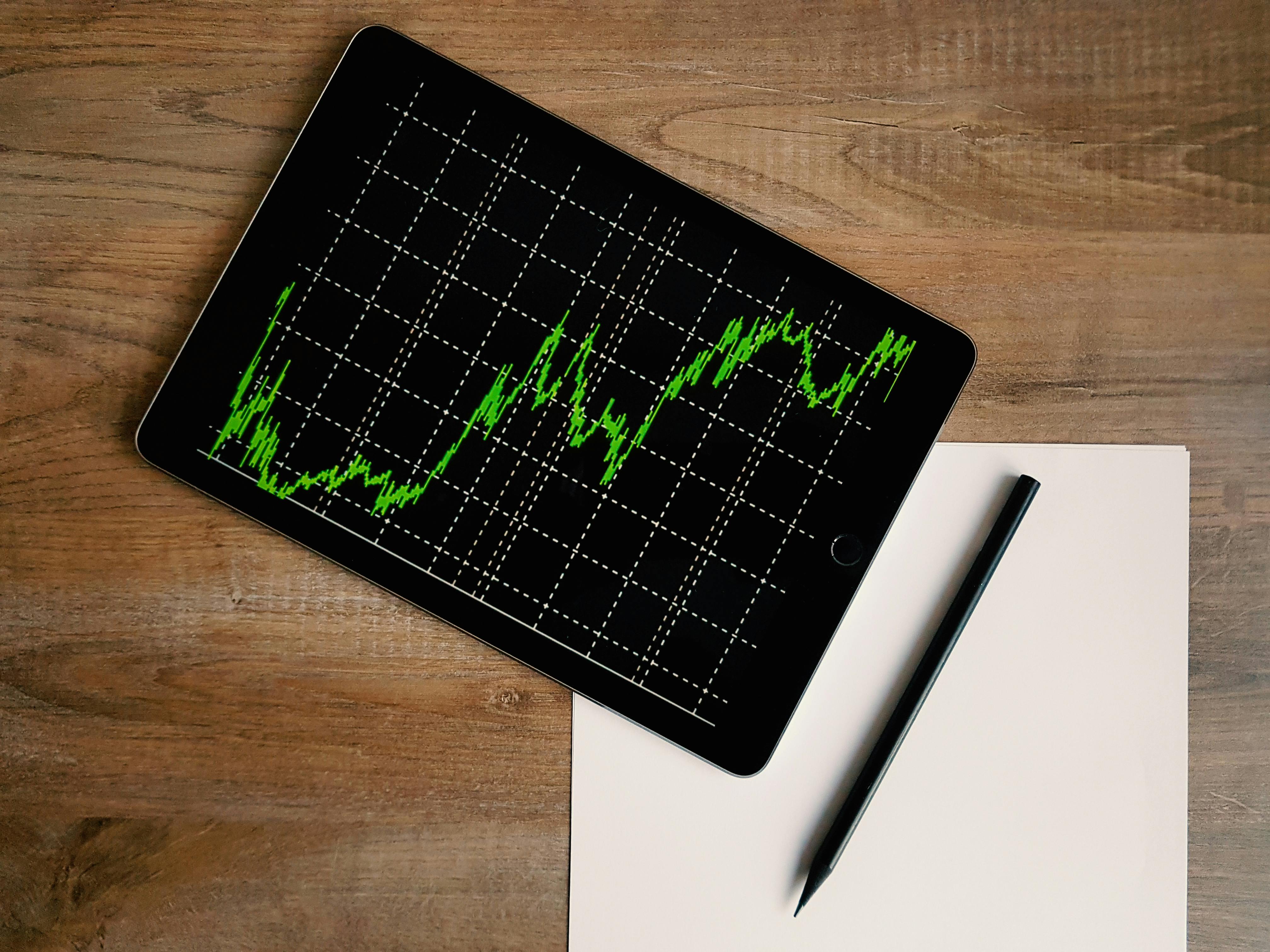
What appears on the surface as fluctuating numbers on a trading screen is actually the visible outcome of an enormous technological ecosystem. Fiber optic networks carry signals between continents. Data centers host matching engines that process millions of transactions per second. Storage systems preserve every financial event for decades. Mathematical models guide investment decisions, while secure communication systems protect global financial flows.
Financial markets are often described in economic terms, but their operation depends just as much on engineering. Without reliable networks, powerful computing systems, and carefully designed software architectures, modern finance simply could not function. The global economy is sustained not only by capital and policy, but also by the invisible technological machinery that keeps financial markets running every second of every day.