The Global Impact of a Room Temperature Superconductor
by Scott
The discovery of a superconducting material that operates at room temperature would represent one of the most profound technological turning points in modern history. For over a century superconductivity has fascinated scientists because of its extraordinary properties. A superconducting material can carry electrical current with zero resistance and can expel magnetic fields through what is known as the Meissner effect. The problem has always been temperature. Known superconductors require extreme cooling, often with liquid helium or liquid nitrogen, which makes them expensive and impractical for widespread everyday use. If a material were discovered that maintained superconductivity at ordinary ambient temperatures and pressures, the consequences would ripple across almost every industry.
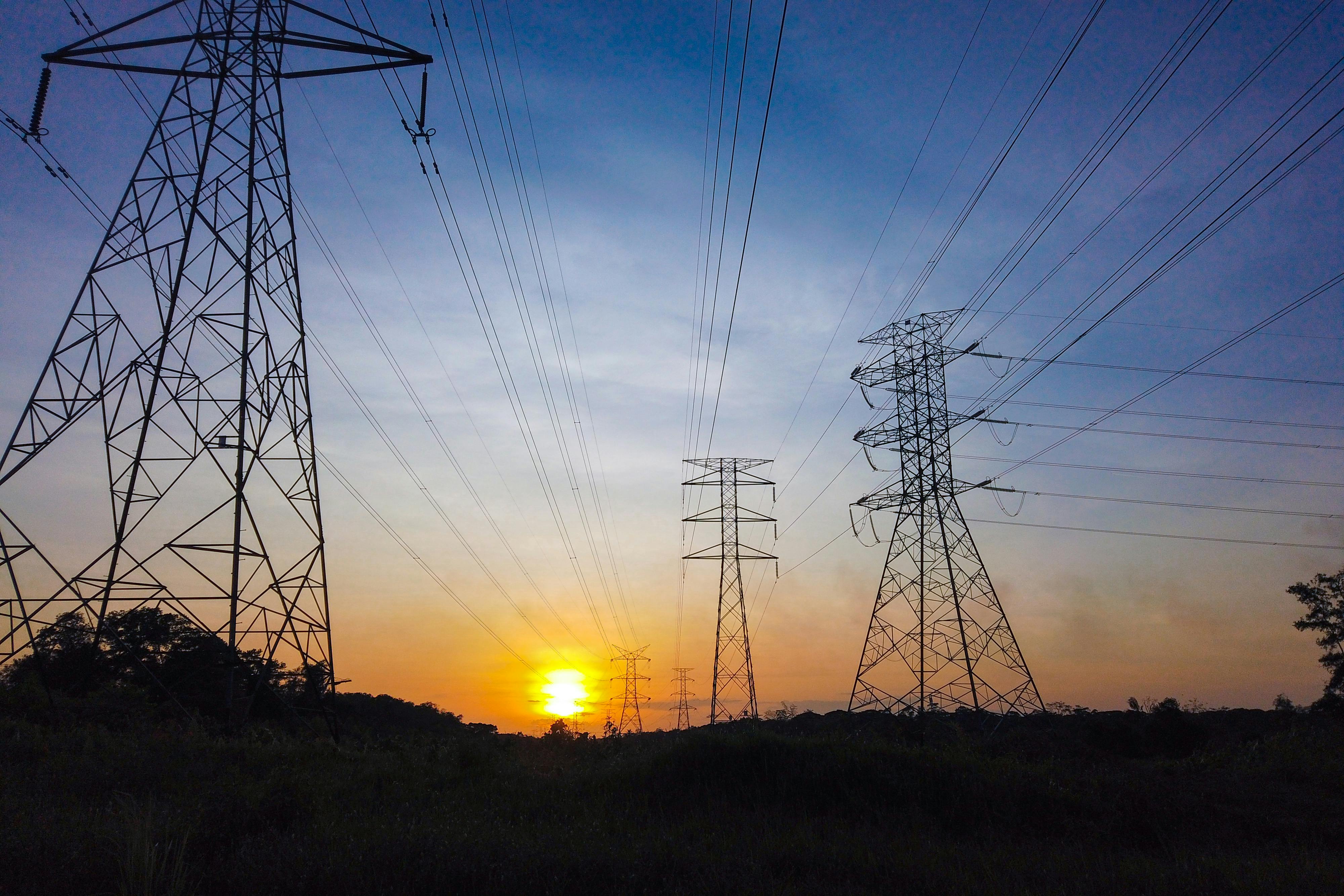
The most immediate and transformative effect would occur in electrical power transmission. Today large portions of generated electricity are lost as heat while traveling through transmission lines. Even small percentages of loss add up across national grids. With room temperature superconductors, electricity could be transmitted across continents without measurable losses. Power stations could be located wherever energy is cheapest or cleanest to produce, without concern for distance. Renewable energy generated in remote deserts or offshore wind farms could be delivered efficiently to dense cities thousands of kilometers away. Grid stability would improve because superconducting cables can handle extremely high current densities. The infrastructure of the power grid would eventually be redesigned around these materials.
Energy storage would also change dramatically. Superconducting magnetic energy storage systems already exist in limited forms, but they require cryogenic cooling. A room temperature version would allow energy to be stored in persistent current loops without degradation. Power could be injected into a superconducting coil and remain circulating indefinitely until needed. This could smooth renewable energy intermittency in a fundamentally new way. The economics of grid scale storage would shift because losses would be negligible.
Transportation would experience major change as well. Magnetic levitation trains depend on powerful superconducting magnets. Present systems require complex cooling infrastructure that limits their deployment. With room temperature superconductors, maglev transport could become more affordable and widespread. Frictionless travel at high speeds might expand beyond select demonstration routes and become a viable alternative to short haul aviation. The efficiency improvements would be considerable because rolling resistance would be removed and propulsion systems could operate with reduced energy waste.
Electric motors and generators would become smaller and more efficient. A superconducting motor can generate stronger magnetic fields for a given size compared to conventional copper windings. That means higher torque density and less heat production. Aircraft design could be reimagined if electric propulsion systems achieved dramatically higher power to weight ratios. Ships and industrial machinery would benefit from lighter more compact drive systems. Cooling requirements inside factories and vehicles would decrease because electrical losses would nearly disappear.
The computing industry would also feel deep impacts. Superconductors enable ultra fast switching devices and highly sensitive measurement systems. While quantum computing already relies on superconducting circuits at cryogenic temperatures, a room temperature superconductor might open new device architectures that are currently impossible. Classical computing could benefit from low loss interconnects and extremely fast signal propagation. Data centers might reduce their energy consumption significantly because resistive heating in power distribution networks would decline. However superconductivity alone would not eliminate all heat from computation since transistor switching still generates thermal energy, but the overall system efficiency would improve.
Medical imaging and scientific instrumentation would advance. Magnetic resonance imaging machines rely on superconducting magnets cooled with liquid helium. Helium is expensive and finite. A room temperature superconductor would remove this constraint. MRI machines could become smaller, cheaper, and more accessible. Research laboratories could construct powerful magnets without the logistical burden of cryogenics. Particle accelerators, fusion reactors, and advanced experimental physics facilities would see significant cost reductions and performance improvements.
The economic consequences would be profound. Industries built around cryogenic cooling might shrink, while new manufacturing sectors would emerge around the production and processing of the superconducting material. Supply chains would reorganize depending on the elements required for the new compound. If the material relied on rare elements, geopolitical dynamics could shift around resource access. If it were composed of abundant elements, its impact could be even more widespread and democratizing.
Infrastructure upgrades would not happen overnight. Replacing the global power grid would require decades of investment. Utilities would have to balance the cost of ripping out existing copper and aluminum lines against the efficiency gains. Retrofitting cities would be a large scale engineering effort. However once the long term cost savings became clear, adoption would accelerate.
There would also be technical challenges. Superconductivity often involves delicate material structures. Even at room temperature the material might require specific fabrication conditions or might be brittle or difficult to scale into long wires. Engineering research would focus heavily on mechanical strength, durability, and manufacturability. If the superconductor were sensitive to impurities or mechanical stress, that could complicate deployment.
Magnetic field management would become an important design consideration. Superconductors expel magnetic fields and can create extremely strong magnetic environments. Devices using them would require shielding and careful engineering to avoid unintended interference with nearby electronics. Urban planning and electrical design standards would need updating to reflect these new conditions.
Environmental impacts would likely be positive overall. Reduced transmission losses mean fewer power plants would need to operate at peak output. Electrification of transport would become more attractive if motors and charging infrastructure improved in efficiency. However mining and refining the materials required for superconductors would carry environmental considerations of their own.
Defense and aerospace sectors would gain new capabilities. Advanced radar systems, electromagnetic launch systems, and compact high power generators could become more practical. Spacecraft propulsion concepts that rely on strong magnetic fields or efficient power transfer could advance. The military implications would be closely studied by governments.
Financial markets would react strongly to the announcement of a verified room temperature superconductor. Energy companies, utilities, materials science firms, and transportation manufacturers would experience significant volatility. Long term investors would look for industries positioned to benefit from grid upgrades and high efficiency electric systems.
Public perception would likely frame the discovery as a breakthrough comparable to the transistor or the internet. For over a century superconductivity has represented a kind of scientific holy grail. The symbolism of eliminating electrical resistance entirely carries intuitive appeal. It would signal that certain physical limitations once thought permanent had been overcome.
Despite the transformative potential, it would not solve every problem. Superconductors eliminate resistive losses but do not generate energy themselves. Broader questions of energy production and sustainability would remain. Economic inequality could influence how quickly benefits spread across regions. Early adopters would gain advantages in infrastructure efficiency and industrial competitiveness.
In the long term a room temperature superconductor would likely reshape how societies think about electricity itself. Power transmission would become almost invisible in terms of loss. High field magnet applications would expand. Engineering education would shift to incorporate new design paradigms. The cascading effects would unfold over decades rather than years, but the direction would be clear. Electricity would become cheaper to move, easier to store, and more efficient to use.
Such a discovery would stand as a rare example of a materials science breakthrough with systemic global consequences. It would connect physics, economics, energy policy, and everyday life in ways few technologies can. While much would depend on the properties and scalability of the specific material discovered, the broad trajectory is easy to imagine. The removal of resistance from electrical systems would remove friction from countless technologies that define the modern world.