The End Of The Keyboard And The Rise Of Voice Gesture And Spatial Input
by Scott
For decades, the keyboard has been the primary way humans communicate with computers. Rows of plastic keys have shaped how we work, create, communicate, and think. From typewriters to laptops, the keyboard has been a constant companion. Yet quietly, almost without ceremony, the foundations that made keyboards essential are beginning to shift. We are entering an era where voice, gesture, and spatial input are no longer experimental novelties, but practical alternatives that increasingly fit how humans naturally interact with the world.
The keyboard exists because early computers needed structured, precise input. Machines could not interpret tone, movement, or intent. Text was reliable, unambiguous, and easy to process. Over time, typing became a learned skill, even a professional requirement. Entire education systems reinforced it. But typing was never natural. It was efficient only because nothing better existed. As computing power grew and sensors improved, the gap between human expression and machine understanding began to narrow.
Voice input is the most obvious challenger. Speaking is humanity’s oldest interface. We form thoughts verbally long before we learn to write. Modern speech recognition has improved dramatically, driven by large language models, neural networks, and massive training datasets. Dictation is now accurate enough for emails, notes, coding assistance, and real time translation. What once required slow, deliberate enunciation now works in natural conversational tones. The friction of typing every thought is slowly being replaced by the immediacy of speech.
But voice is only part of the shift. Gesture-based input brings computing closer to physical intuition. Touchscreens were the first step, letting people swipe, pinch, and tap instead of clicking abstract pointers. From there, cameras and motion sensors expanded what gestures could mean. A raised hand can pause playback. A simple movement can scroll content or select objects. These actions feel less like issuing commands and more like interacting with something tangible.
Spatial input takes this evolution further. Instead of interacting with flat screens, users interact with digital objects positioned in three dimensional space. Headsets, depth sensors, and eye tracking systems allow computers to understand where you are looking, how your body is positioned, and what you are reaching for. Input becomes contextual. You do not type to open a document; you look at it and gesture. You do not navigate menus; you move through environments.
This change is not about novelty. It is about reducing cognitive load. Typing requires translation. You convert thoughts into words, then words into keystrokes. Voice and gesture remove layers of abstraction. You speak what you mean. You point to what you want. Spatial input aligns computing with how humans already operate in the physical world. The technology adapts to us, instead of the other way around.
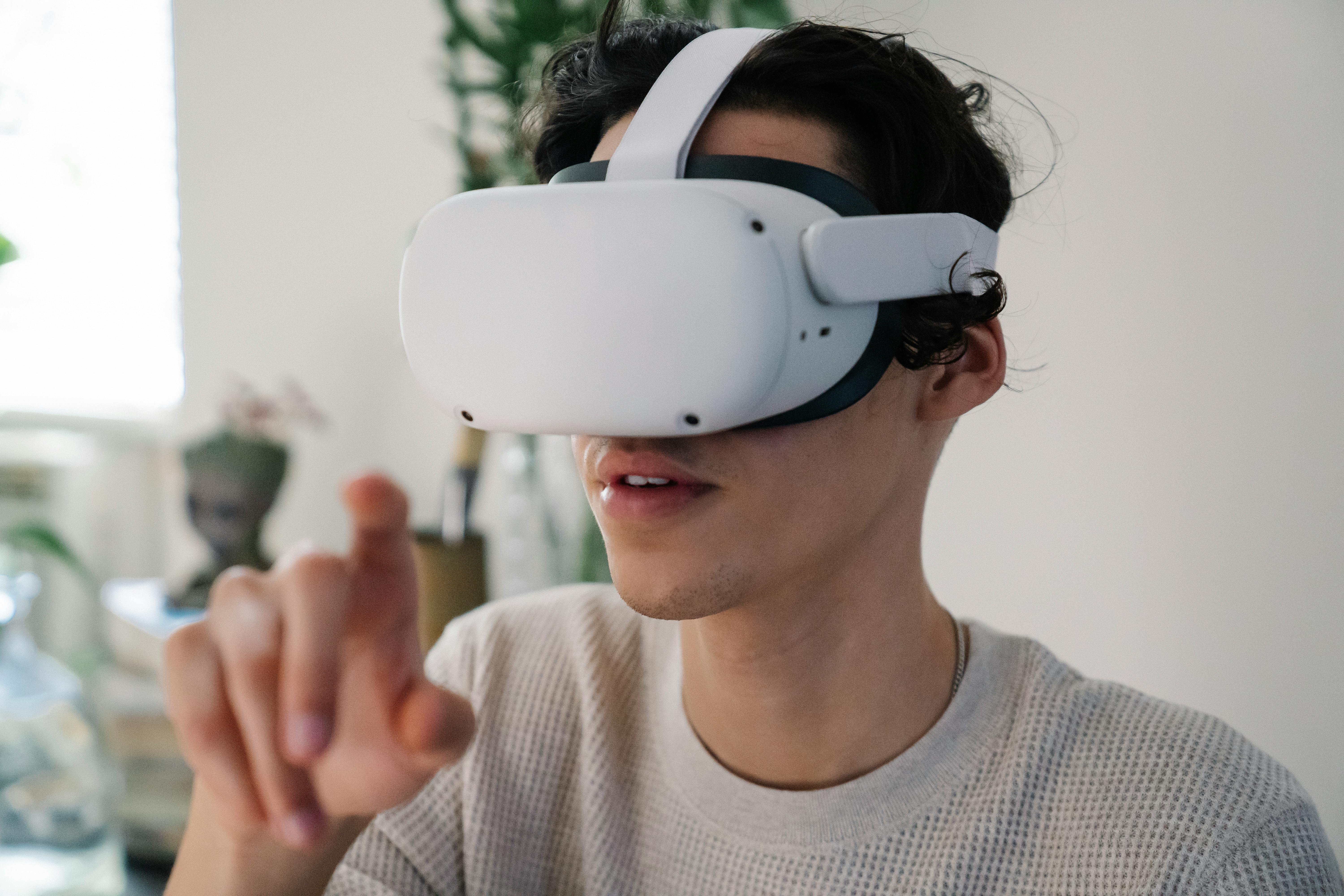
Another factor accelerating the decline of the keyboard is artificial intelligence acting as an intermediary. AI systems increasingly infer intent without explicit instructions. You no longer need to specify every parameter. You describe a goal, and the system fills in the details. This reduces reliance on structured input entirely. The keyboard becomes optional when the computer understands context, history, and intent.
That does not mean keyboards will disappear overnight. They remain unmatched for precision tasks like programming, data entry, and writing long form text in controlled environments. But even these areas are changing. Code can be dictated, refactored, and generated collaboratively with AI. Writing can begin as speech and be refined automatically. The keyboard shifts from primary interface to specialized tool.
There are also social and environmental implications. Voice and gesture input change where and how we use computers. Public spaces, shared environments, and accessibility scenarios benefit enormously. People with mobility limitations, vision impairments, or repetitive strain injuries gain new ways to interact. Children and older adults find technology less intimidating when it responds naturally.
Of course, challenges remain. Voice input struggles in noisy environments. Gesture systems require accuracy and can be fatiguing if poorly designed. Spatial computing raises privacy concerns, especially when cameras and microphones are always active. These are not trivial problems, but they are engineering challenges, not fundamental limitations.
What makes this moment different from previous predictions about the death of the keyboard is that alternatives are already here, already usable, and already improving rapidly. The shift is not driven by hype, but by convenience. People adopt interfaces that feel easier, faster, and more natural. When speaking or gesturing saves time and effort, habits change quietly and permanently.
The keyboard will not vanish in a dramatic ending. It will fade into the background, used when needed, ignored when not. Just as touchscreens did not eliminate mice overnight, voice and spatial input will coexist for years. But the trajectory is clear. The future of human computer interaction looks less like typing commands and more like interacting with ideas.
In the end, the story is not about the keyboard disappearing. It is about computers finally learning to meet humans on human terms.