Our Mate the Friendly Magpie
by Scott
Every evening, sometime between five and seven, our household quietly waits for a familiar visitor. Like clockwork, a magpie arrives and announces the close of the day in a way that has become deeply comforting. We’ve come to call him Our Mate, not because we named him lightly, but because that’s exactly what he feels like: a friend who checks in on us as the sun begins to dip.
His routine is almost always the same. He lands first on our neighbour’s roof, perfectly framed in view from our living room. From there, he makes his way up along the ridge line, hopping steadily until he reaches the apex. Once settled, he perches there with quiet confidence, surveying his surroundings and, more often than not, keeping a careful eye on us inside. He’ll stay for up to fifteen minutes, warbling softly, sometimes bursting into those unmistakable magpie songs that feel both melodic and deliberate. We stop what we’re doing and watch, marvelling at his presence, before he eventually takes off toward home to settle in for the night.
Magpies are remarkably intelligent birds, and Our Mate’s behaviour reflects that. They are known for being creatures of habit, maintaining daily routines and predictable patrols through their territory. This regularity isn’t accidental; it’s part of how they manage resources, safety, and social relationships. Our Mate’s evening visit feels very much like one stop on a well-practised round, a familiar checkpoint before nightfall.
One of the most fascinating traits of magpies is their memory. They are capable of recognising individual human faces and remembering them for years. Once a magpie decides someone is trustworthy, that trust tends to last. It’s hard not to feel that Our Mate has made that assessment of us. There’s a sense of mutual acknowledgment in the way he watches from the roof, alert but calm, curious without being cautious.
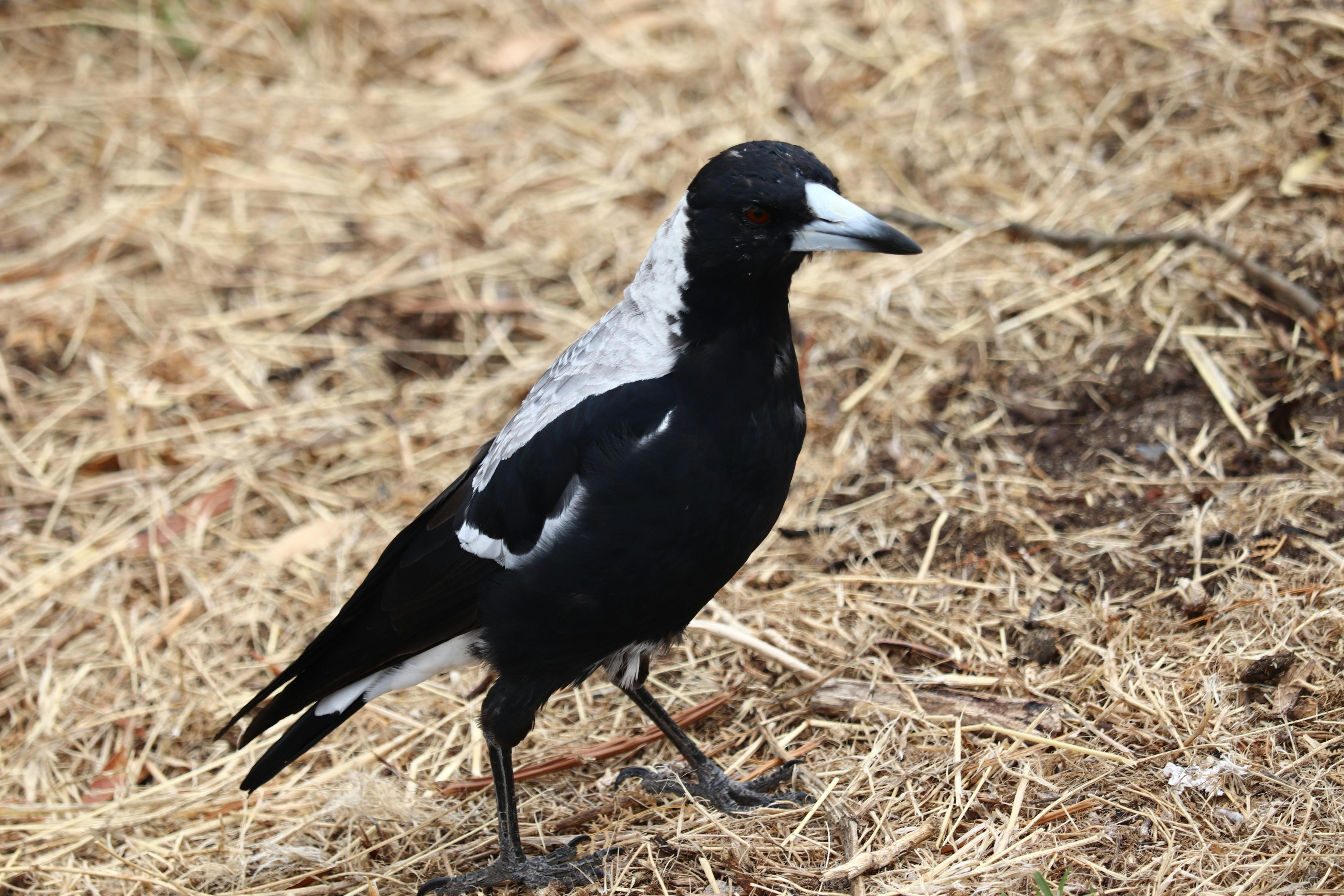
Magpies are also highly social and will happily congregate where food is available. Their intelligence extends to understanding which people are safe and even beneficial. In areas where magpies learn that humans are not a threat, their behaviour changes noticeably. Swooping, often associated with breeding season and perceived danger, tends to diminish once they recognise familiar, non-threatening faces. Trust alters the relationship, and the birds adapt accordingly.
Problem solving is another hallmark of magpie intelligence. Studies have shown their ability to work through challenges, remember solutions, and apply past experiences to new situations. This cognitive sharpness is evident even in small behaviours, like choosing vantage points, timing visits, or reading the reactions of people nearby. Our Mate’s dependable routine and confident presence suggest a bird that knows his environment well and understands his place within it.
That dependability is part of why we worry when he doesn’t show up on time. On the rare evening he’s late, there’s a quiet pause in the house, a glance toward the window, a shared question of whether he’s alright. When he does arrive, it feels like balance is restored, as though the day can properly come to a close.
Our Mate doesn’t stay long, and he never overstays his welcome. He arrives, sings, observes, and moves on, leaving behind a sense of calm and connection. In his own way, he reminds us that intelligence, routine, and trust exist well beyond human boundaries. He’s a small but meaningful part of our daily rhythm, and every evening visit feels like a simple, unspoken reminder that even the wildest of creatures can become familiar friends when respect and trust are shared.