Life After the Instant Loss of All Technology
by Scott
Imagine a moment where every electronic system on Earth stops functioning at the same instant. No warning, no degradation, no partial failure. Power grids collapse, computers go dark, radios fall silent, engines stall, satellites become inert objects in orbit, and every device containing active electronics ceases to work. The world does not end in fire or explosions, but in an abrupt, unnatural silence.
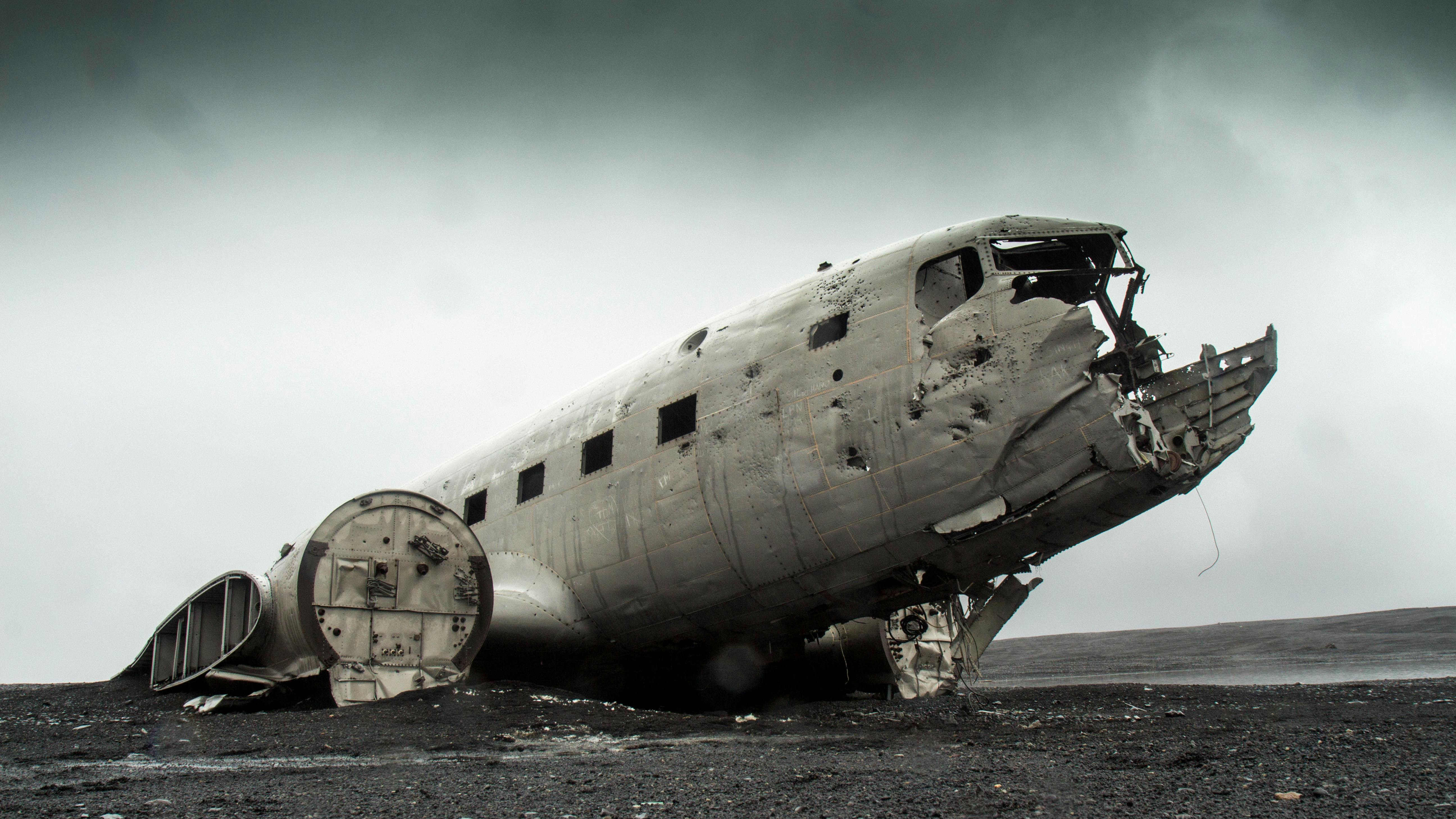
The first seconds would be marked by confusion rather than panic. Lights would flick off mid-room. Elevators would stop between floors. Vehicles with electronic ignition systems would stall wherever they happened to be, clogging roads instantly. Aircraft in flight would lose avionics, navigation, and fly-by-wire systems, forcing pilots to rely on basic mechanical controls if they still existed, while many modern aircraft would be unable to remain controllable. Trains would stop on tracks. Ships would drift. Hospitals would lose life-support systems. The suddenness would be disorienting, as people instinctively assume a temporary outage rather than total collapse.
Within minutes, financial systems would effectively cease to exist. Banks rely entirely on electronic records; money stored digitally would become inaccessible and unverifiable. ATMs would be useless, card payments impossible, trading systems frozen forever mid-transaction. Stock markets would not “crash” in the traditional sense, because they would simply vanish. Ownership of wealth would become ambiguous overnight, reduced to whatever physical assets someone could immediately access. Cash would briefly matter, then quickly lose trust as no authority could validate its value or issue replacements.
Businesses would grind to a halt almost immediately. Supply chains, which depend on software, logistics tracking, automated ordering, and digital communication, would fracture within hours. Warehouses would be unable to track inventory. Fuel pumps would stop working. Manufacturing plants would be permanently shut down mid-process. Offices would be useless shells without computers, networks, or communication. Jobs tied to digital infrastructure would disappear instantly, not through layoffs but through irrelevance.
Psychologically, the first day would be one of disbelief. People would attempt to reboot devices, search for signals, wait for updates that would never come. Anxiety would spread unevenly, with some assuming a local or regional issue, while others would begin to grasp the global scale. The absence of information would be as damaging as the loss of technology itself. Without news, maps, clocks, or coordination, rumors would fill the vacuum. Fear would grow not because of what people knew, but because of what they could not confirm.
Within the first 24 hours, the breakdown of trust would accelerate. Emergency services would be overwhelmed and then disappear as vehicles, dispatch systems, and communications failed. Urban areas would become especially fragile. Grocery stores would empty quickly as people attempted to secure food and water, only to realize restocking was impossible. Refrigeration would fail, spoiling perishables. Water treatment plants would shut down, making clean water scarce within days. Law enforcement, unable to coordinate or respond, would retreat into localized, improvised efforts.
By the end of the first week, society would begin to fragment along physical and social lines. Cities would become dangerous as resources dwindled and populations concentrated without support systems. Rural areas, while less technologically dense, would fare better due to proximity to food sources and smaller populations. Communities with strong social cohesion, practical skills, and shared resources would stabilize faster than those dependent on centralized systems. The psychological shift would move from panic to survival mode.
Weeks into the collapse, the world would resemble a patchwork of isolated regions operating under entirely new rules. Barter systems would replace money. Skills such as farming, mechanical repair, first aid, and construction would become more valuable than any previous profession. Knowledge stored only in digital form would be effectively lost, while books, printed manuals, and human memory would become priceless. Education would revert to apprenticeship and oral tradition.
Governments, if they survived at all, would shrink into localized authorities. National borders would matter far less than access to land, water, and people willing to cooperate. Conflict would arise in some areas, while others would discover a surprising capacity for resilience. The absence of electronic surveillance, automation, and digital bureaucracy would force governance to become simpler, slower, and more human-driven.
Over months and years, recovery would begin, but it would not resemble a restoration of the old world. Rebuilding electronic technology from scratch would be extraordinarily difficult without existing infrastructure, manufacturing capabilities, and global coordination. Early recovery would focus on mechanical solutions: windmills, water wheels, animal power, and simple tools. Written records would slowly be recreated. Communication would rely on couriers, printed notices, and face-to-face interaction.
If humanity managed to eventually reintroduce electronics, it would likely happen unevenly and cautiously. Early systems would be simpler, more localized, and less interconnected. The memory of sudden collapse would shape future designs toward resilience rather than efficiency. Redundancy, manual overrides, and physical backups would be prioritized over convenience. Progress would be measured in decades, not product cycles.
The psychological legacy of such an event would be profound. A generation raised without constant connectivity would think differently about trust, memory, patience, and community. The idea of invisible systems quietly running the world would no longer feel safe or desirable. Technology would still be valued, but it would no longer be taken for granted.
In the end, the world would not become a wasteland, but it would become smaller, slower, and more grounded in physical reality. Humanity would survive, adapt, and rebuild, but the illusion of effortless digital civilization would be permanently broken. The collapse would not teach us how fragile technology is. It would teach us how fragile we allowed ourselves to become by forgetting how to live without it.