How We Predict the Weather: From Data in the Sky to the Forecast You See
by Scott
Weather prediction is something most of us take for granted. We check a phone app, hear a forecast on the radio, or glance at the television before heading out the door. Behind those few numbers and icons, however, sits an enormous and carefully coordinated global effort that blends science, technology, human expertise, and decades of observation. Predicting the weather is not about guessing; it is about measuring the atmosphere constantly and making sense of its behavior in real time.
At the foundation of weather prediction is physical infrastructure spread across the planet. Weather stations are positioned on land, at sea, and even in remote or inhospitable regions to collect basic measurements such as temperature, humidity, air pressure, wind speed, and wind direction. These stations operate around the clock, quietly feeding data into national and international networks. Even a small shift in pressure or temperature can signal larger changes developing elsewhere.
Beyond ground-based stations, weather balloons play a critical role. Launched daily from hundreds of locations worldwide, these balloons rise high into the atmosphere, carrying instruments that measure conditions at various altitudes. As they ascend, they transmit data back to the surface, providing a vertical snapshot of the atmosphere that ground stations alone cannot capture. This information is vital for understanding how weather systems evolve above us, not just at ground level.
Satellites are perhaps the most visible and powerful tools in modern weather prediction. Orbiting Earth continuously, they monitor cloud formations, ocean temperatures, storm development, and even atmospheric moisture invisible to the human eye. Some satellites remain fixed over one point on Earth, offering constant surveillance, while others circle the planet, building a comprehensive global picture. Without satellites, tracking hurricanes, cyclones, and large-scale weather patterns would be nearly impossible.
All of this raw data flows into supercomputers designed specifically for weather modeling. These machines process staggering amounts of information using mathematical equations that simulate how air, heat, and moisture move through the atmosphere. Weather models are not static; they are recalculated many times a day as new data arrives. Each update refines the forecast, improving accuracy as conditions unfold.
Different models serve different purposes. Some focus on short-term forecasts spanning hours to days, while others look weeks ahead to identify broader trends. Meteorologists often compare multiple models to understand uncertainty and identify consistent signals. When several models agree, confidence increases. When they diverge, human judgment becomes especially important.
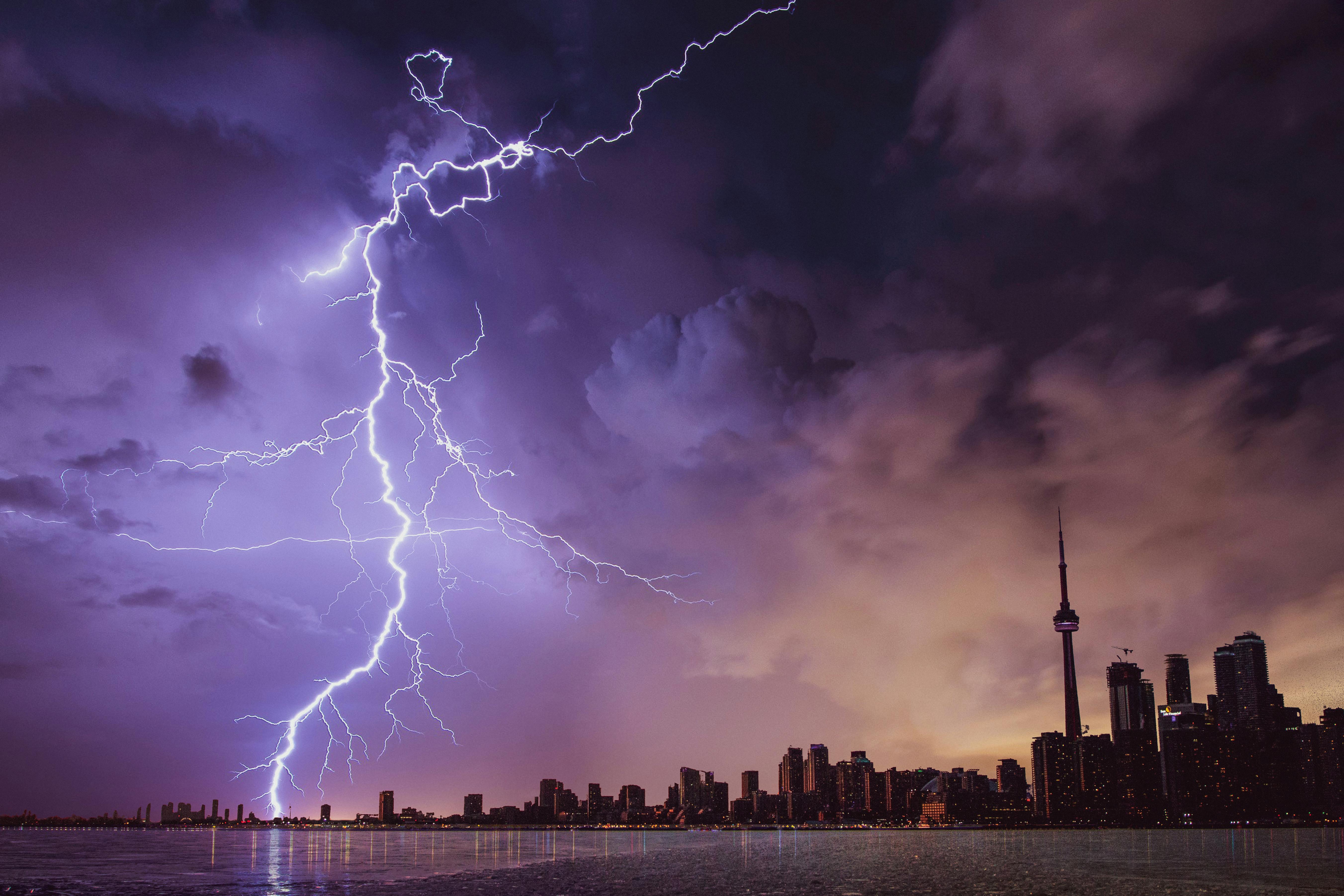
This is where meteorologists come in. Despite the power of computers, weather prediction is not fully automated. Meteorologists interpret model outputs, compare them with historical patterns, and account for local geography that models may not fully capture. Mountains, coastlines, and urban environments can dramatically alter weather behavior, and experienced forecasters know how to factor these influences into their predictions.
Forecast information must then be translated into language people can understand. This process involves simplifying complex data without losing meaning. A forecast is not just about numbers; it is about impact. Will rain disrupt travel? Will heat pose health risks? Will wind conditions become dangerous? Communicating risk clearly is as important as predicting the weather itself.
Broadcasting forecasts brings another layer of responsibility. Television, radio, websites, and mobile apps all deliver weather information differently. Visual elements like maps, radar images, and animations help people grasp what is coming and when. Weather presenters serve as trusted interpreters, combining scientific accuracy with clarity and reassurance, especially during severe events.
Extreme weather highlights the full scope of forecasting infrastructure. When storms, floods, or heatwaves threaten lives and property, forecasts trigger warning systems, emergency responses, and public action. Accuracy matters deeply, but so does timing. Issuing alerts too late or too early can reduce their effectiveness, making precision and communication equally critical.
Despite technological advances, weather prediction remains imperfect. The atmosphere is a chaotic system, meaning small changes can produce vastly different outcomes. Forecast accuracy has improved dramatically over the decades, especially for short-term predictions, but uncertainty can never be eliminated entirely. A forecast is always a probability, not a promise.
As technology advances, weather prediction continues to evolve. Improved sensors, more powerful computers, and better models are steadily extending forecast reliability. Yet at its core, weather forecasting remains a human endeavor built on observation, interpretation, and communication. Every forecast represents a global collaboration, quietly working to help people prepare for what the sky might bring next.