How Server Farms Survive Power Failures
by Scott
Modern data centres are designed around a simple assumption that power will eventually fail. Utility grids are reliable most of the time, but storms, equipment faults, grid instability, and human error make outages inevitable. The reason most users rarely notice is that server farms are engineered with multiple overlapping layers of electrical resilience. What appears to be uninterrupted digital continuity is actually the result of careful planning, redundant infrastructure, and automated failover systems operating within milliseconds.
The first layer of defense against a power interruption is the uninterruptible power supply, commonly known as a UPS. In a large data centre, a UPS is not a small battery box under a desk. It is an industrial scale system capable of supporting entire server halls. Most enterprise facilities use either double conversion online UPS systems or rotary UPS systems. In a double conversion design, incoming AC power is immediately converted to DC, which charges batteries and feeds an inverter that produces clean AC output for the IT load. Because the output is always generated by the inverter, there is no switching delay when utility power fails. If the grid drops, the batteries simply continue supplying DC to the inverter without interruption.
Battery banks in data centres are typically composed of large arrays of sealed lead acid batteries or increasingly lithium ion modules. They are engineered to provide full load support for several minutes. That window is not meant to sustain the facility indefinitely. Instead, it bridges the gap between utility failure and generator startup. In some facilities, flywheel based energy storage supplements or replaces traditional batteries. Flywheels store kinetic energy in a rapidly spinning mass. When power drops, the rotational energy is converted back into electricity for a short duration. Flywheels offer high power density and reduced maintenance compared to chemical batteries.
As soon as a power disturbance is detected, automated systems signal standby generators to start. Large data centres rely on diesel generators because diesel fuel is energy dense, stable in storage, and capable of delivering sustained output. These generators are industrial scale machines, often arranged in parallel configurations. They are connected through switchgear that synchronizes frequency and voltage before accepting load. Modern facilities design generator capacity with redundancy, often referred to as N plus one or even 2N architectures. N plus one means that one additional generator beyond the required capacity is installed. If one fails, the others can still support the load.
The transition from utility to generator power is controlled by automatic transfer switches. These devices continuously monitor incoming utility voltage and frequency. If they detect instability or total failure, they isolate the data centre from the grid and connect it to generator output once it is stable. In double conversion UPS systems, servers do not see this transition directly because they are already powered through the inverter stage. The switching occurs upstream, making the event invisible to the computing hardware.
Fuel logistics are another critical component. Generators are useless without sustained fuel supply. Most facilities maintain on site diesel storage tanks sized to provide many hours or even days of operation. Contracts with fuel suppliers ensure rapid replenishment during extended outages. In regions prone to severe weather, facilities may stockpile larger reserves to withstand supply chain disruptions. Fuel quality monitoring systems are also used to prevent contamination or degradation in stored diesel.
Power architecture inside the data centre is intentionally fault tolerant. Server racks are typically equipped with dual power supplies. Each power supply connects to separate power distribution units fed by independent UPS and generator paths. If one electrical path fails due to breaker trip, maintenance, or equipment fault, the second path continues supplying power without interruption. At higher levels, data centres may use entirely separate electrical rooms for each redundant path, reducing the risk that a localized failure affects both.
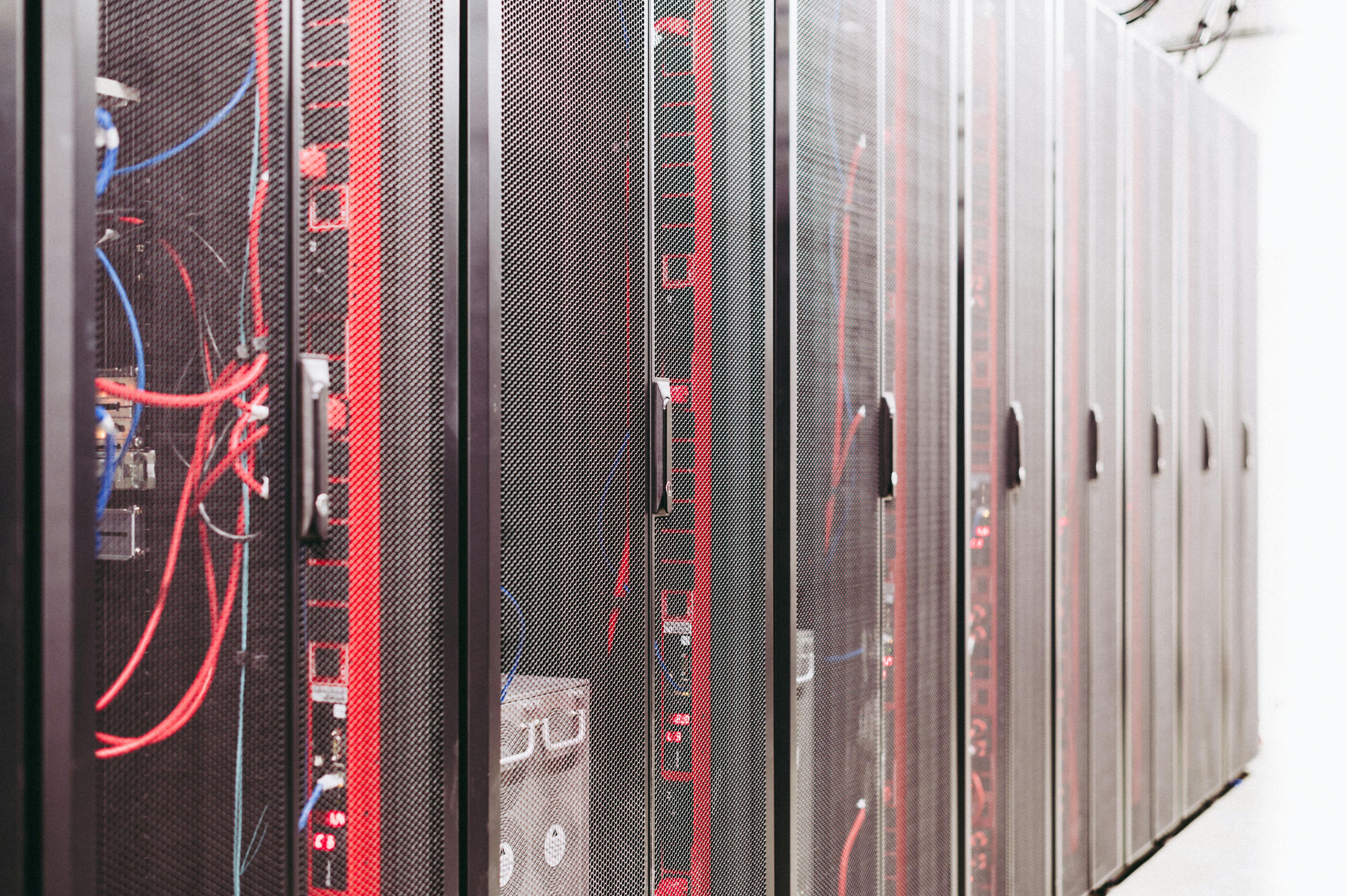
Distribution within the building often follows an A and B feed model. Servers, storage arrays, and network equipment are connected to both feeds simultaneously. This architecture allows maintenance on one side while the other carries the load. Redundant transformers and switchgear further isolate potential failure points. Even cooling systems are integrated into the redundancy model, since power outages and cooling failures are closely linked in risk scenarios.
Monitoring and control systems play a major role in survivability. Power management software continuously tracks load levels, battery health, generator status, fuel levels, and environmental conditions. Predictive maintenance algorithms can detect abnormal patterns such as battery impedance changes or generator vibration anomalies. Scheduled load testing ensures that generators and UPS systems perform as expected under real world demand. These tests simulate utility outages to validate automatic startup sequences and synchronization.
Beyond on site resilience, many large scale cloud providers design geographic redundancy into their architecture. Even if an entire facility were to experience a catastrophic event, workloads can be redistributed across other regions. Data replication strategies ensure that critical data exists in multiple physical locations. This adds a layer of logical resilience on top of physical power protection.
Modern server farms also address smaller scale disturbances such as voltage sags, harmonic distortion, and transient spikes. Power conditioning equipment smooths these irregularities before they reach sensitive electronics. The objective is not only to survive complete blackouts but to maintain stable electrical characteristics under fluctuating conditions.
There is also a growing interest in sustainability within data centre power systems. Some facilities integrate renewable energy sources such as solar or wind into their supply mix. While renewables can contribute to baseline consumption, backup generation remains essential for reliability. Research is underway into alternative backup systems such as hydrogen fuel cells, which could eventually replace diesel generators in some scenarios. However, for now, diesel remains the dominant standby solution due to its proven reliability and energy density.
The survivability of server farms during power failures is not the result of a single technology but a layered design philosophy. Utility input, UPS buffering, automatic transfer switching, generator redundancy, dual power distribution, and geographic replication all work together. Each layer assumes that another layer might fail. That assumption drives conservative engineering choices and rigorous testing.
When the lights flicker in a neighborhood, most people expect disruption. In a well designed data centre, the servers continue processing transactions, hosting applications, and storing data without a visible pause. The continuity is not accidental. It is engineered through redundancy, automation, and a deep understanding of how electrical systems behave under stress. Behind every uninterrupted digital service lies a carefully constructed electrical backbone built to withstand the moment when external power inevitably disappears.