How GPS Quietly Changed Human Navigation Forever
by Scott
It’s hard to remember what navigation felt like before GPS became ordinary. Not because paper maps disappeared overnight, but because the expectation changed. Today, “Where am I?” and “How do I get there?” are questions most people answer in seconds, often without even thinking about how astonishing that is. GPS didn’t just make directions easier. It altered human habits, the design of cities and services, and the way we measure time and position across the entire planet.
GPS, short for Global Positioning System, is a satellite-based positioning and timing service run by the United States. It was originally created for military purposes, to give forces accurate position and time anywhere on Earth. The program began in the 1970s, and it reached full operational capability with a 24-satellite constellation in the early 1990s. Over time, it became a shared utility for civilian life as well, and it now underpins everything from phone navigation to shipping logistics and infrastructure timing.
The basic idea behind GPS is beautifully simple in concept and brutally precise in execution. GPS satellites broadcast a time-stamped radio signal along with information about where the satellite is supposed to be in space. Your receiver, whether it’s a phone, a car system, or a dedicated GPS unit, listens for multiple satellites at once. By measuring how long each signal took to arrive, the receiver estimates its distance from each satellite. With distances to at least four satellites, the receiver can solve for latitude, longitude, altitude, and an extremely accurate time reference. This process is often described as trilateration, but the real magic is timing: position becomes a time problem, and time becomes the foundation of location.
Timing is where the system gets serious. GPS satellites carry highly stable atomic clocks and continuously broadcast time information, while the ground control segment monitors the satellites, updates their navigation messages, and maintains the system’s overall integrity. Receivers correct for known errors such as atmospheric delay and satellite clock drift using data in the navigation message, plus additional correction sources when available. The result is that everyday devices can determine position with surprisingly good accuracy, and professional systems can achieve far better accuracy using corrections and advanced techniques.
GPS didn’t just help people stop getting lost. It enabled entirely new classes of technology and services. Turn-by-turn navigation is the obvious one, but GPS also made modern ride-share and delivery logistics viable at scale, improved emergency response location, enabled precision agriculture, supported surveying and construction, improved fleet tracking, and helped synchronize networks that depend on accurate time. Many people don’t realize that positioning, navigation, and timing are bundled together for a reason: timing is a hidden pillar for communications networks, financial systems, and other infrastructure that needs tight synchronization.
One of the biggest shifts GPS caused is behavioural. People now navigate differently. Instead of building an internal map of an area, many rely on continuous step-by-step guidance. That can be convenient, but it changes how spatial memory is exercised. The same technology that empowers someone to drive anywhere confidently can also reduce the need to learn routes, landmarks, or directional intuition. This isn’t a moral judgment, just an observable tradeoff: we’ve outsourced a chunk of navigation cognition to a device.
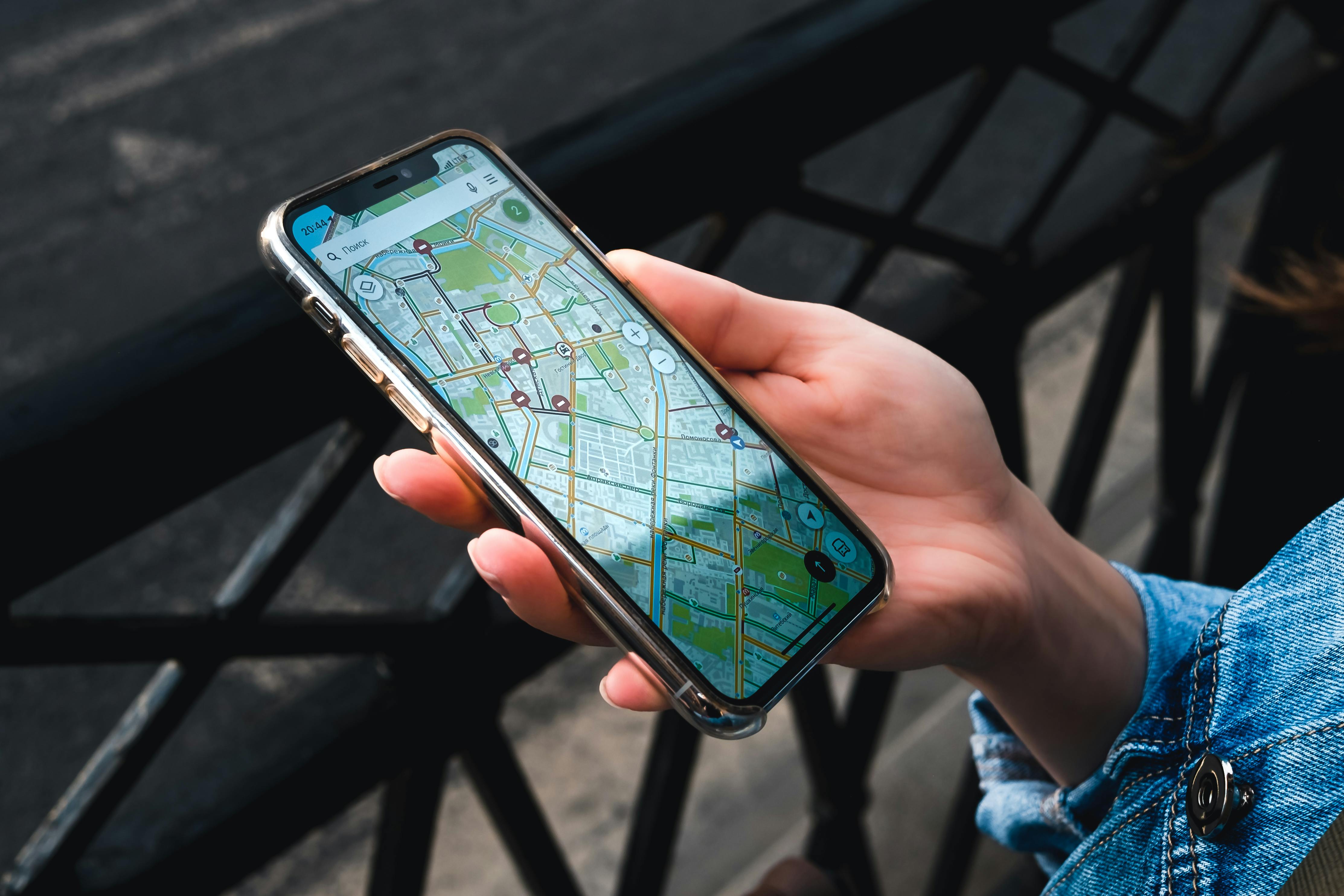
The GPS space segment is still very much maintained. While the system is often described as having 24 satellites, the actual operational number is usually higher because on-orbit spares are included to ensure global coverage. Satellites are continuously replaced and upgraded as older ones reach the end of their service lives. This ongoing maintenance reflects how critical GPS has become to global infrastructure and daily life.
Will GPS be replaced anytime soon? In practical terms, it is unlikely. GPS is deeply embedded worldwide, and replacing it outright would require not only new satellites but new receivers, standards, and global coordination across countless industries. Instead of replacement, the system is evolving. Newer satellites transmit improved signals, and receivers increasingly use multiple satellite navigation systems at once. The future of navigation is less about abandoning GPS and more about strengthening it through redundancy and modernization.
That raises the question of alternatives. GPS is no longer the only global satellite navigation system, and modern devices often combine signals from multiple constellations to improve accuracy and reliability. Beyond satellites, complementary technologies exist, such as inertial navigation systems that estimate movement using internal sensors, and terrestrial radio-based systems designed as backups. These alternatives are gaining attention as awareness grows around signal interference, jamming, and spoofing risks.
The cost of GPS is difficult to capture in a single number. The original constellation required billions of dollars to design, build, and launch. Over the decades, additional investment has gone into operations, maintenance, and modernization. Continued upgrades to satellites and ground systems represent long-term commitments measured in tens of billions of dollars. Despite this, the cost per user is effectively zero, as GPS signals are provided freely to the world, making it one of the most economically impactful public infrastructure projects ever created.
Navigation technology continues to improve on top of GPS. Modern phones and vehicles fuse satellite positioning with accelerometers, gyroscopes, barometers, Wi-Fi positioning, and cellular data. This sensor fusion allows for smoother navigation in cities, indoors, and in environments where satellite signals are partially blocked. Future navigation systems are likely to become even more context-aware, offering lane-level guidance, real-time hazard awareness, and stronger resistance to signal interference, all while relying on the same fundamental principles established decades ago.
Ultimately, GPS didn’t just change how we find our way from one place to another. It reshaped what society assumes is possible. It enabled services that only function when location is reliable and accurate, and it created an expectation that the world is always navigable. The infrastructure remains carefully maintained because too much depends on it, and because replacing it outright is far harder than evolving it.
GPS is one of the most influential technologies of the modern era precisely because it fades into the background. It doesn’t feel like using space-based infrastructure. It feels like normal life. And that may be its greatest achievement: becoming so dependable that it is only truly noticed when it is unavailable.