How Close Humans Really Are to Visiting and Living on Mars
by Scott
For as long as humans have looked up at the night sky, Mars has held a special place in our imagination. It is close enough to feel reachable, yet distant enough to remain mysterious. In recent decades, the idea of not just visiting Mars but actually living there has shifted from science fiction into a serious scientific and engineering discussion. The question is no longer whether it is theoretically possible, but how close we really are to making it happen.
Today, the technology needed to reach Mars already exists in a basic form. We know how to launch spacecraft beyond Earth’s orbit, sustain astronauts on the International Space Station for long periods, and land robotic explorers on the Martian surface. Advances in propulsion, life support systems, autonomous navigation, and robotics have steadily moved the goalposts. What remains challenging is not a single breakthrough, but the integration of many systems that must work reliably for years at a time, far from Earth.
Near-future technology is focused on making interplanetary travel safer, cheaper, and more sustainable. Reusable rockets dramatically reduce launch costs and allow for more frequent missions. Habitat modules are being designed to support long-duration stays, with closed-loop life support systems that recycle air and water. Research into nuclear and advanced electric propulsion could shorten travel times, reducing astronauts’ exposure to radiation and microgravity. These developments don’t eliminate the risks, but they make a Mars mission increasingly feasible.
The amount of money and resources being invested into space exploration is substantial and growing. Governments fund space agencies to explore long-term human presence beyond Earth, while private companies invest heavily in launch systems, spacecraft, and mission planning. The combined spending reaches tens of billions of dollars annually, and much of it is aimed at building infrastructure that could eventually support human missions to Mars. This isn’t a short-term effort, but a sustained push that reflects long-range planning.
Living on Mars would be fundamentally different from anything humans have experienced. The planet has a thin atmosphere, mostly composed of carbon dioxide, with surface pressures far below what humans can survive in without protection. There is no global magnetic field to shield the surface from cosmic radiation, and temperatures can swing dramatically. Any human settlement would need to exist within sealed habitats, buried structures, or underground spaces to provide pressure, temperature control, and radiation protection.
Survival would depend on careful resource management. Water exists on Mars primarily as ice, and extracting it would be essential for drinking, hygiene, oxygen production, and fuel generation. Food production would likely rely on hydroponics or aeroponics, growing plants in controlled environments using recycled water and nutrients. Early settlers would depend heavily on supplies from Earth, but long-term habitation would require local resource utilization to reduce reliance on resupply missions.
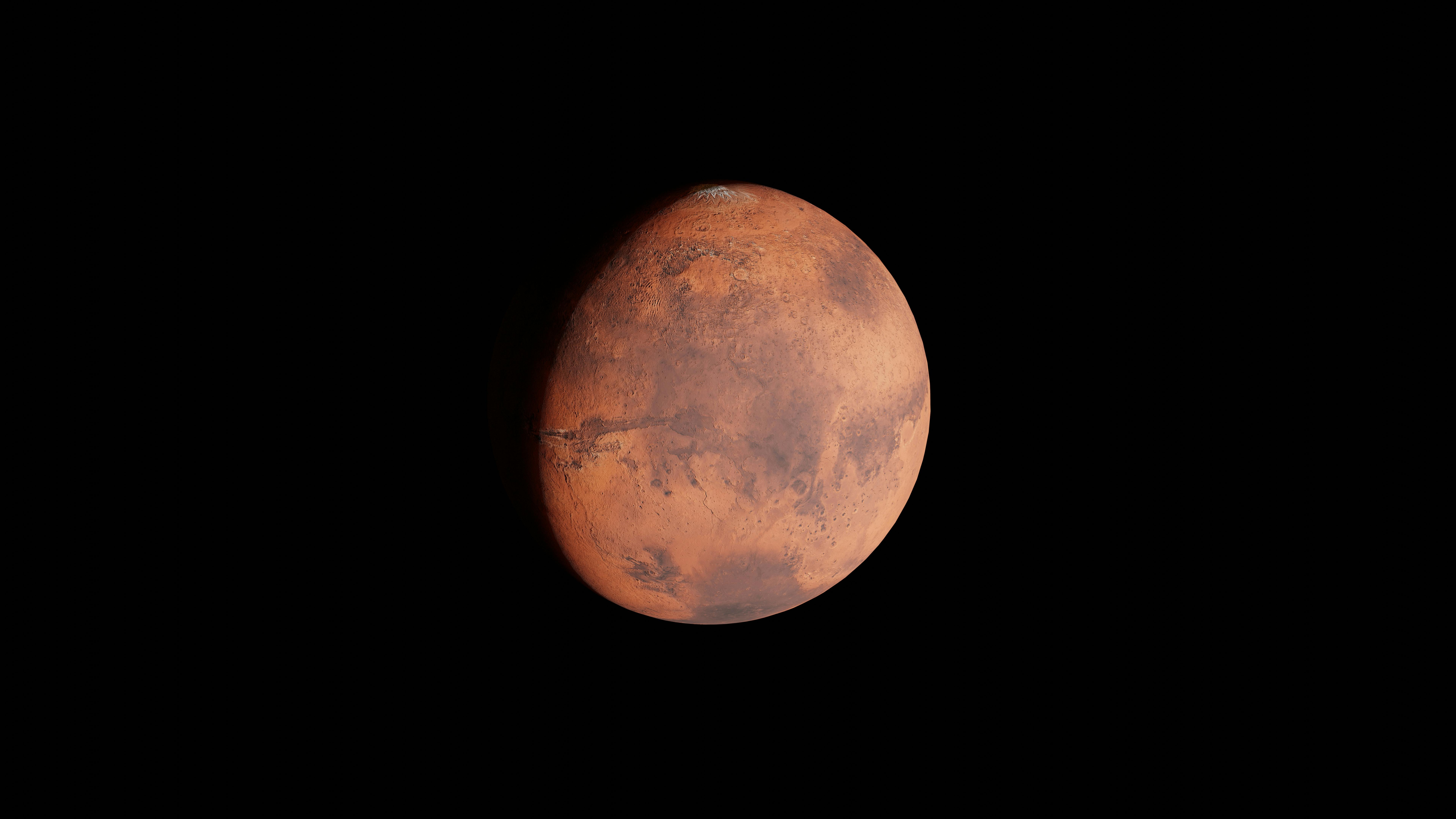
Radiation remains one of the most serious challenges. Without a protective magnetosphere, Mars is constantly bombarded by cosmic rays and solar radiation. Long-term exposure increases cancer risk and could cause damage to the nervous system. Solutions include building habitats beneath the surface, using thick layers of regolith for shielding, or developing advanced materials to block radiation. None of these are simple, but they are technically achievable with enough planning and resources.
Another consideration is human reproduction. If humans live on Mars long enough, babies will inevitably be born there. This raises complex questions about development in lower gravity, which is roughly one-third of Earth’s. We don’t yet know how reduced gravity would affect bone growth, muscle development, or organ formation over a lifetime. Medical care would be limited, and evacuation to Earth would not be an option in emergencies. These uncertainties make long-term settlement far more complex than short visits.
Psychological challenges are just as important as physical ones. Living on Mars would mean extreme isolation, confined spaces, and delayed communication with Earth. Messages can take anywhere from several minutes to over twenty minutes each way, depending on planetary alignment. Real-time conversations would be impossible. Settlers would need to be highly self-sufficient, capable of solving problems without immediate help, and resilient enough to cope with prolonged separation from Earth.
Communication delays also affect operations and decision-making. Emergency responses would rely entirely on the people on Mars, as Earth-based support would arrive too late to intervene. This requires a cultural shift in how missions are planned, emphasizing autonomy, redundancy, and robust training. The settlers would effectively be pioneers, operating beyond the safety net that modern astronauts rely on.
It’s also likely that many humans who travel to Mars would eventually want to return to Earth. Long stays in reduced gravity could make returning physically difficult, as muscles and bones weaken over time. Emotionally, the pull of Earth, with its open skies, familiar environment, and social connections, would be strong. Mars may be exciting and meaningful, but it is unlikely to replace Earth as a comfortable home for most people.
In reality, humans are closer to visiting Mars than living there permanently. A crewed mission within the coming decades is plausible, provided current momentum continues. Permanent settlement, however, remains a far more distant goal. It requires not just technology, but solutions to biological, psychological, ethical, and social challenges that we are only beginning to understand.
Mars represents both a destination and a test. It forces humanity to confront the limits of our technology and our adaptability. While the dream of living on another planet is compelling, it is also sobering. Getting to Mars is a matter of engineering. Living there, raising families, and building a sustainable society is a far greater challenge. Whether or not we ultimately succeed, the effort itself is already reshaping how we think about our place in the universe.