Dial-Up to Always On: How Connectivity Reshaped the Modern World
by Scott
Before the internet became something that was always present, always fast, and always expected, it arrived slowly, audibly, and with limits that shaped how people used it. Dial-up internet was not just a technical method of connecting to the network; it defined an entire era of digital behavior and expectations.
Dial-up internet worked by using existing telephone lines to transmit data. A modem converted digital signals from a computer into audible tones that could travel over analog phone infrastructure, and then converted incoming tones back into digital data. Because telephone lines were never designed for data transmission, speeds were extremely limited and connections were fragile. A household could not use the phone and the internet at the same time, and any interruption on the line could drop the connection instantly.
What was considered “fast” dial-up evolved over time. Early connections ran at 14.4 kilobits per second, then 28.8 kbps, and eventually peaked at 56 kbps under ideal conditions. In practice, real-world speeds were often lower. Even at its fastest, dial-up could take minutes to load a single image-heavy webpage, and downloading a small software update could require hours.
The distinctive sound dial-up modems made during connection was the result of this signal negotiation process. Those tones were modems identifying each other, agreeing on protocols, compensating for line noise, and synchronizing data transfer parameters. To users, that sound became synonymous with accessing the wider world. It signaled both possibility and patience, and it served as a reminder that connectivity was neither instant nor guaranteed.
Despite its limitations, dial-up internet had a profound impact. It introduced millions of people to email, web browsing, online forums, and early digital communities. Because bandwidth was scarce, content was lightweight, text-focused, and deliberate. Websites loaded quickly because they had to. Communication was asynchronous, thoughtful, and often intentional. The constraints shaped behavior as much as the technology itself.
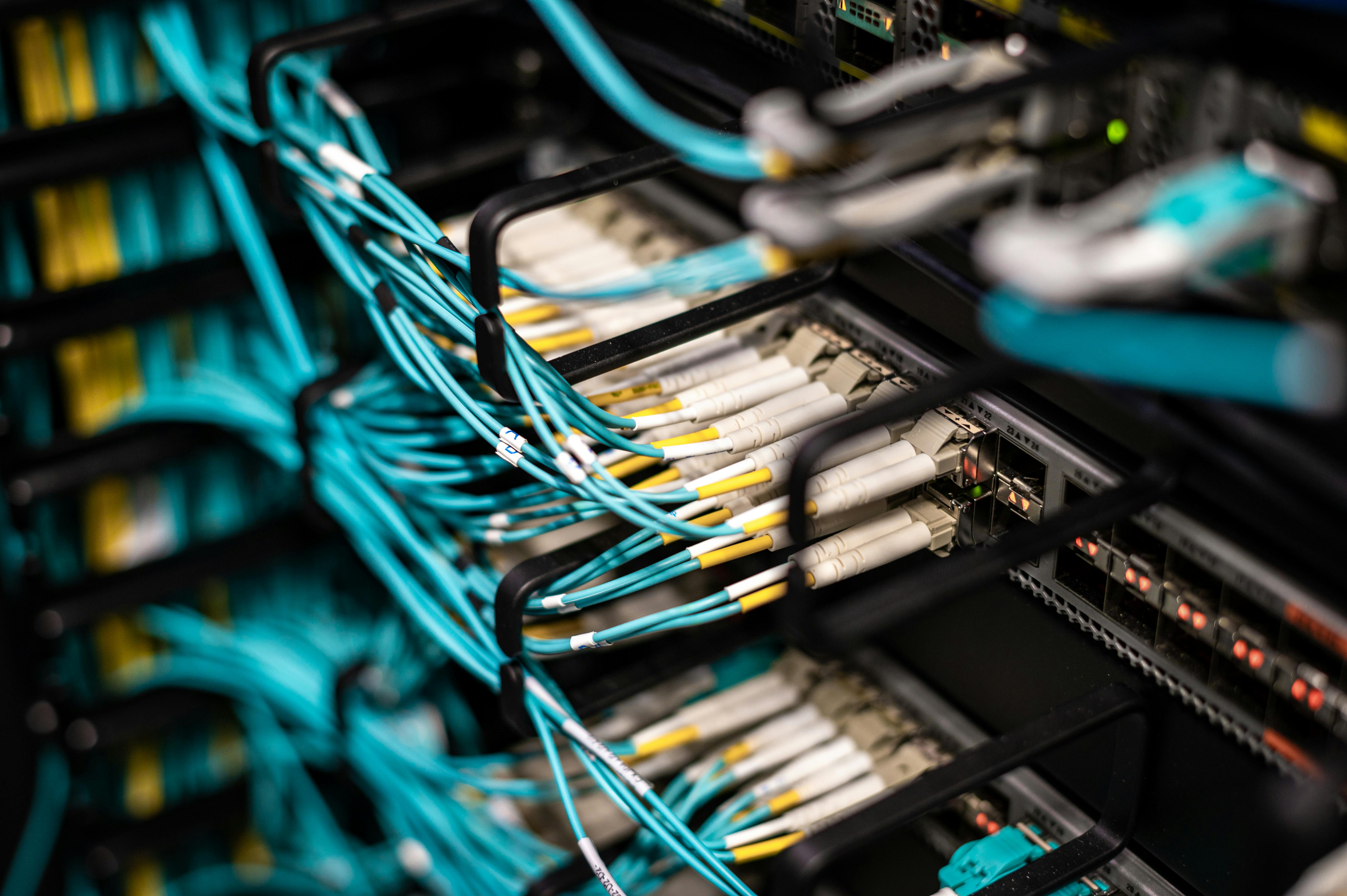
Broadband changed that relationship rapidly. Technologies like DSL, cable, and later fiber eliminated the need for modems to dial a number and removed the dependence on phone lines. Connections became always-on, significantly faster, and more reliable. Adoption was swift once infrastructure became available. In many regions, broadband replaced dial-up within a few years, fundamentally altering how people interacted with the internet.
With broadband came richer websites, streaming media, and real-time communication. Email remained important, but instant messaging services quickly gained popularity, offering real-time conversation without the cost of phone calls. File sharing, online gaming, and media consumption expanded rapidly as bandwidth increased. The internet shifted from a place you visited occasionally to something woven into daily life.
Today, connectivity has advanced far beyond early broadband. High-speed mobile networks, fiber connections, and satellite internet now reach large portions of the globe. Smartphones allow constant access to information, communication, and services. Video calls, cloud computing, and real-time collaboration are commonplace. Devices once used only for communication now serve as cameras, navigation tools, entertainment systems, and gateways to vast computational resources.
The speed of this progression can feel astonishing. In a relatively short span of time, society moved from waiting minutes for a webpage to load, to carrying devices capable of high-definition video calls and real-time language translation. Generative artificial intelligence now allows people to ask complex questions and receive synthesized responses instantly, something that would have seemed implausible during the dial-up era.
Several factors explain why technological progress has accelerated so rapidly. Advances build upon one another, compounding over time. Improved connectivity enables faster collaboration, which accelerates innovation. Computing power has increased dramatically while becoming smaller and more energy-efficient. Software development has benefited from global collaboration, open standards, and shared knowledge. Economic incentives and consumer demand have further driven rapid adoption.
As for where the road leads next, the pattern suggests continued integration rather than isolated breakthroughs. Connectivity is likely to become faster, more ubiquitous, and less visible. Artificial intelligence will increasingly augment everyday tasks. Devices may become more ambient, embedded into environments rather than held in hand. At the same time, questions around privacy, security, and sustainability will grow in importance.
Whether society is ready for even faster technological change is an open question. History suggests that adoption often outpaces reflection, and that cultural adaptation lags behind technical capability. Each major shift brings both opportunity and disruption. The transition from dial-up to broadband reshaped communication, work, and social interaction in ways few anticipated at the time.
Looking back at the dial-up era provides useful perspective. It reminds us that today’s expectations were shaped by years of constraint, experimentation, and gradual improvement. Understanding where connectivity came from helps contextualize where it is going, and highlights how quickly the extraordinary can become ordinary.